
A water softener is one of the most valuable appliances that need regular maintenance, like all other appliances in your home. There is a significant connection between the maintenance of systems, the performance of the system and the lifespan of the system.
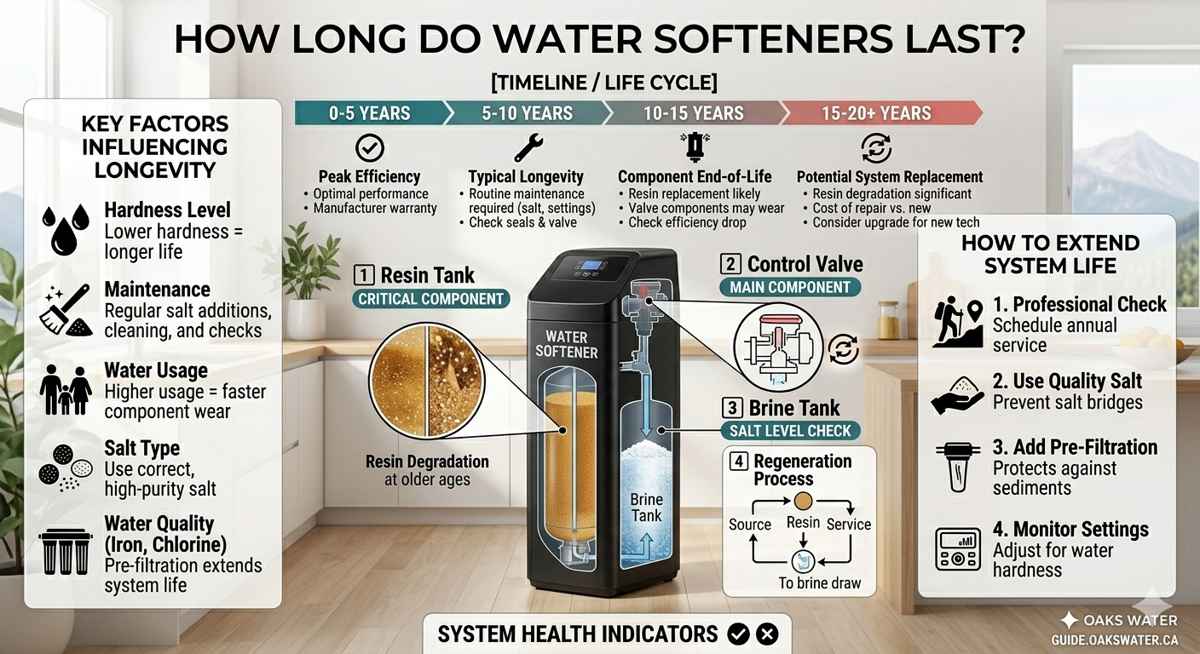
Regular maintenance can extend the lifespan of your system. A well-maintained system can last for 10-20 years, but a poorly maintained system gives you a bad experience of water taste as well as the system’s life.
The maintenance period of a water softener varies according to the available water type and your water usage. In Canada, the water is harder than in other regions and water treatment systems in Canadian homes require more monitoring.
To enjoy the best experience and long life of Oaks Water Softeners, you need to monitor your system regularly.
Types of Water Softeners and Their Maintenance Patterns
There are two types of water softeners offered by Oaks Wellness Water:
- Salt-based Water Softener
- Salt free Water softener
Both of the systems are used to soften the water but the system’s complexity varies much.
Salt-free Water Softener is a simple system having only one TAC media that needs to be changed after 3-5 years, and it requires minor maintenance regularly.
On the other hand, a salt-based water softener is a complex system having a brine tank, valves, and a resin bed and it works on the principle of the ion exchange method that requires salt. So, this type of system requires more monitoring as compared to salt free water softener.
Signs Your Water Softener Needs Maintenance
A properly maintained system functions properly and provides you with soft water and its benefits. When any part of your system needs maintenance, you will face the problem of hard water returning that can be guessed by following simple signs:
- Soap not lathering
- White spots on dishes, tiles and fixtures
- Dry skin
- Frizzy hair
- Increased shampoo and detergent use
If you face any of the above problems, you need to check which specific part of your water softener system needs maintenance and monitoring.
How Often Should You Add Salt to a Water Softener?
A salt-based whole-house water softener needs salt to work properly. It works on the principle of the ion exchange method. If the salt is not enough, the system won’t work efficiently. You need to refill salt every 2-4 months. But there are some factors that affect the frequency to refill the salt.
If the available water has a high hardness level and has a large family size, the system needs more salt, and you need to refill the salt more frequently.
You can feel some signs, i.e., bad water taste, stiff laundry, skin and hair that tell you the salt level is low. You need to keep the tank at least half full for a better experience.
Choosing the Right Type of Salt
You need to choose the right type of salt for the best performance of your system. The salt recommendation is given with the system. The low quality and wrong type of salt may affect your system badly.
It is recommended to use pellet salt rather than the crystalline salt, as pellet salt dissolves equally to give better results.
If you are using well water with iron in it, you need to use an iron-removal specialized salt. These salts contain such additives that can clean resins, preventing iron from accumulating in them.
If your family is sensitive to sodium, you can use an alternative to sodium chloride, i.e., potassium chloride, for a better experience.
Preventing and Fixing Salt Bridges
Salt bridging is one of the common problems that needs to be addressed. It is actually the hardening of the salt in the tank, leaving a hollow space between salt and water. Eventually, the salt does not dissolve to produce a brine solution necessary for regeneration.
It is very simple to test that there is a salt bridge in your system. Open the tank lid, take a long broom handle and put it in salt. If you feel a hardened layer and a space below the salt, it means a bridge has been formed.
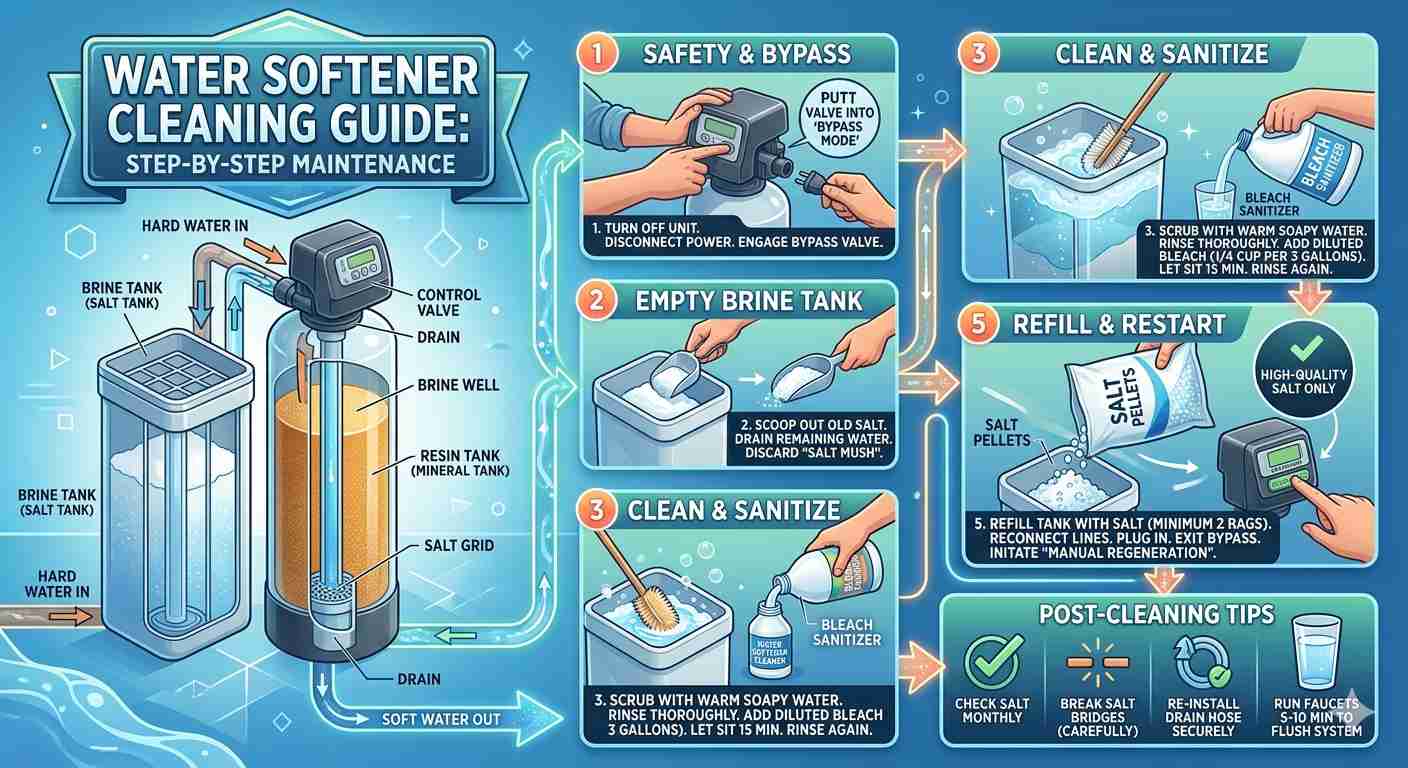
You can break the salt bridge easily with the help of a broom handle or by using a rubber mallet by hitting from outside. After breaking it, remove the larger chunks of salt.
To prevent salt bridges, monitor your system regularly. Use the best salt type and enough quantity of salt, and improve ventilation around the system to prevent bridging caused by moisture.
What Is Salt Mushing and How to Remove It?
Unlike salt bridging, salt mushing is formed at the bottom of the tank, preventing the brine from drawing out during the regenerative cycle. It is formed when the dissolved salts re-crystallize and harden at the bottom. It is a more serious problem than the bridging as it completely blocks the water flow and the recycling process.
Removing salt mush is done through thorough cleaning of the tank. You need to turn off the system. Separate the brine tank, scoop out the mush, rinse it properly with clean water and reassemble it.
It is recommended to contact an Oaks professional if you don’t know about the disassembling components.
To prevent future mushing, use the best quality salt, avoid moisturizing near the system and monitor the tank regularly.
How Often Should a Water Softener Regenerate?
Water Softener regeneration is a process that restores the system’s ability to soften the water. In this regeneration cycle, the resin beads are removed by using a brine solution to wash away the accumulated calcium and magnesium.
According to the regeneration cycle, the system is of two types: time-based and meter-based systems. The time-based system regenerates every 4-7 days regardless of water hardness level and water usage. It may cause over- and under-regeneration. Whereas, a meter based system regenerates when it is needed to be.
Cleaning the Brine Tank
Cleaning the brine tank is necessary as it accumulates dirt, salts and sediments. It needs cleaning every 2-3 years.
You can clean it by separating the tank and scrubbing it with warm water and mild dish soap. Rinse it properly to clean the residues of soap.
Cleaning the Resin Bed with a Softener Cleaner
The resin bed is the most important part of the water softener. It attracts and accumulates calcium and magnesium that make a coat in it that reduces its efficiency. It needs to be cleaned once or twice a year. If the available water contains a high quantity of iron and other contaminants, you need to clean it every 3-4 months.
The resin bed cleansing is a simple process. You need to add a resin cleaner liquid solution in the brine tank, and it will dissolve the accumulated iron, salts and contaminants and remove them in the next regeneration cycle.
Inspecting and Cleaning the Venturi Valve
The function of the Venturi valve is suction brine from the brine tank into the resin tank. It is just a small opening that can be blocked with sediments, salts and other contaminants.
The common signs of blockage of venture valves are hard water returning, and water remaining in the brine tank after regeneration, etc. It needs to be cleaned once or twice a year.
Adjusting and Testing the Bypass Valve
The main purpose of the bypass valve is to divert water around the system during maintenance. It gets stiff due to a lack of movement. It is recommended to adjust it once a month to prevent it from becoming stiff.
Smart Features & Maintenance Alerts
Most of the modern systems include digital displays and salt level monitoring. It tells you about salt level, regeneration status, and identifies mechanical and operational problems by using built-in error codes.
Some of the systems send you notifications via digital apps and give you an alert when the salt level is low, regeneration is complete, and your system needs service. These systems have also reduced the salt, water and energy consumption, along with ensuring the soft water performance for a long time.
Conclusion
To enjoy the best experience of the water softener system, you need to maintain it properly. The regular maintenance of the system does not give you better taste and odor of water, but also extends your system’s lifespan.
Make a checklist of maintenance and monitor your system according to the timeline. If you are an experienced homeowner to handle the appliances you can do it yourself. On the other hand, if you are unsure about the maintenance process, it is recommended to contact an Oaks professional for peace of mind and the best experience.