A water softener needs maintenance and cleaning every 6-12 months. If you don’t clean the water softener system properly, you may face problems such as scale buildup, dry skin, and soap not lathering properly, even after installing a water softener in your home.
The system continuously works to remove hardening minerals, but if it is not cleaned and maintained over time, its efficiency will be disturbed and you will face hard water again.
Regular cleaning habits provide you with a better experience, improves system efficiency, and extends the water softener’s lifespan.
You have to know that installing a system is not enough to provide your family with softer water; you also need to know how to clean and maintain it regularly to maintain the continuous efficiency of the water softener.
Why Cleaning Your Water Softener Is Important
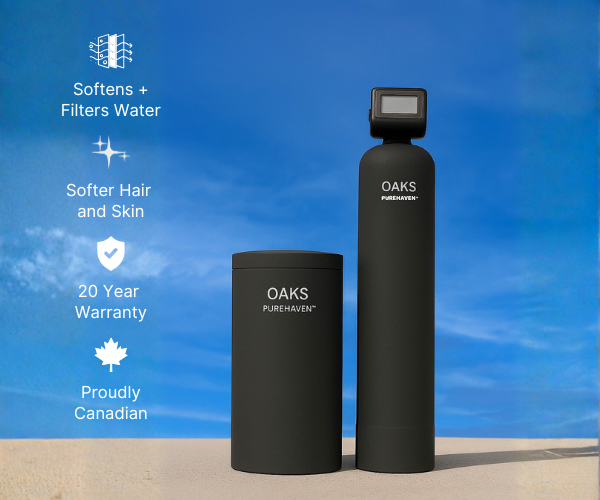
The cleaning of your Oaks water softener does not make your experience better, but also provides you with a lot of long-term benefits:
Improves Softening Efficiency
If you clean the system regularly, it will provide you with consistently cleaner, softer, hotel-quality water by removing hard-water minerals.
Prevents Salt Buildup and Clogs
Regular cleaning prevents salt bridges from forming in the system. It may reduce mushy-salt problems, and you don’t need to add salt repeatedly.
Extends System Lifespan
It protects the system internally and externally. It protects the resin bead and system valves, thereby extending the system lifespan.
Reduces Repair Costs
Regular maintenance prevents small faults from becoming larger ones and saves you repair costs in the long term.
Signs Your Water Softener Needs Cleaning
Some common signs alert you that you need to clean your system as soon as possible:
- You will observe that hard water systems, such as scale buildup, dry hair and skin, and stiff laundry, have been returned.
- There are salt bridges and mush in the brine tank.
- The water pressure has been reduced.
- Your system regenerates more frequently.
- You observe a bad smell and taste in the water due to bacterial growth in the resin tank.
- The salt consumption of the system increased above than usual.
How Often Should You Clean a Water Softener?
Most water softener systems need to be cleaned every 6-12 months. But it is not an accurate figure; the water softener cleaning frequency depends on the water type, water usage, and your family size.
If the available water is municipal water and your usage is moderate, you don’t need to clean the system very often.
On the other hand, if the available water is well water with higher contamination and your family is large with higher water usage, you need to clean the system more often.
It is recommended to clean the system every 6-12 months thoroughly and to have a professional inspection annually.
Tools and Supplies You will Need to Clean the Water Softener
Always check the manufacturer’s recommendations or seek guidance from an Oaks professional before cleaning, and avoid using any harsh chemicals that may destroy your whole system.
You need to prepare some of the essentials before starting the cleaning process:
- Rubber gloves for your safety
- Dish soap
- Water bucket
- Soft brush or sponge
- Recommended resin cleaner
- Bleach use for sanitization
- Warm water
- High-quality recommended salt
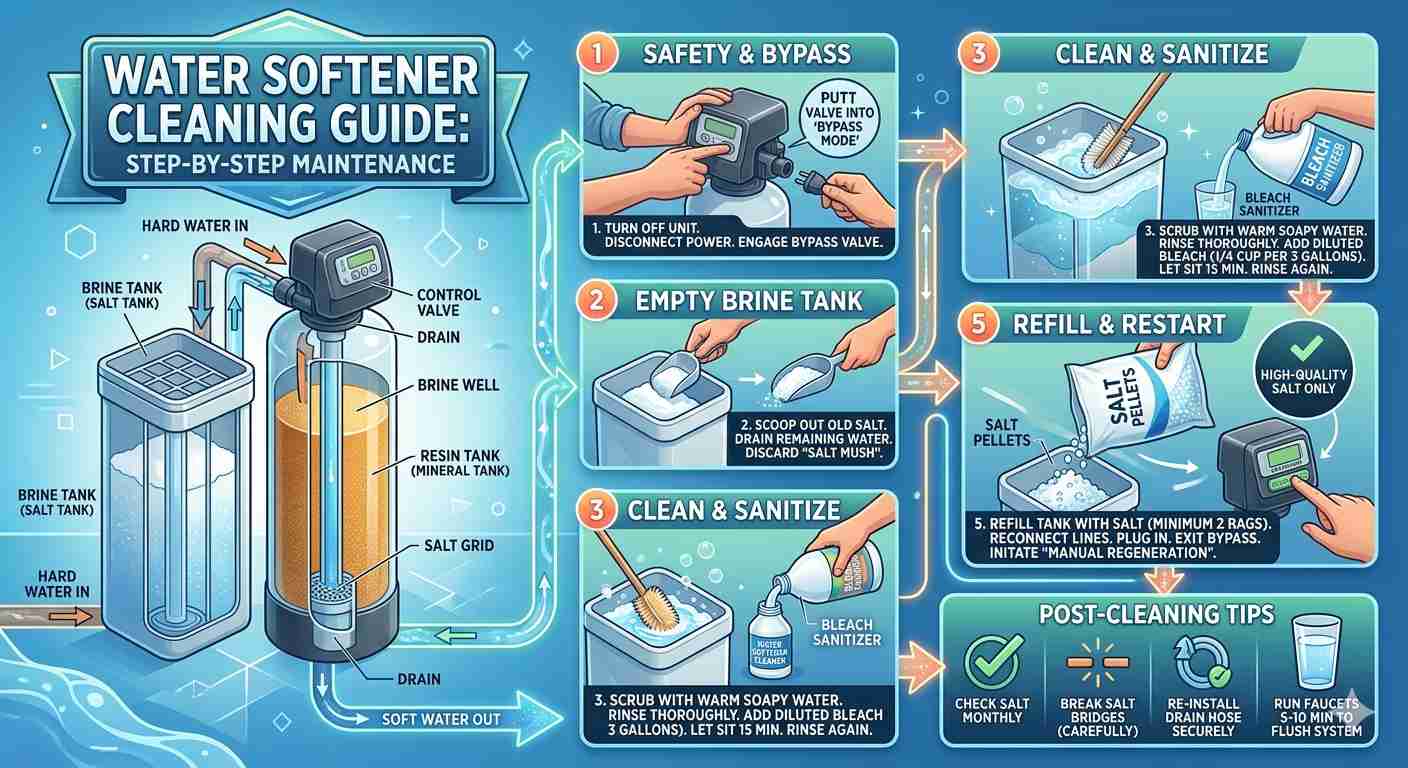
Step-by-Step Guide: How to Clean a Water Softener
Only cleaning the water softener system externally is not enough for better performance of your system. You need to clean it thoroughly step by step:
Disconnect the Water Softener’s Power
Your safety should be your priority. Firstly, disconnect the system’s power by turning it OFF. Use bypass mode by switching the valves to use water during the cleaning process.
Empty the Brine Tank
Secondly, separate the brine tank to empty it. Remove the remaining salt from the tank and properly dispose of all the contaminants accumulated at the bottom of the tank.
Remove the Salt Bridges
Sometimes, a layer of salt forms in the brine tank due to moisture or the use of the wrong type of salt. Break the salt bridges carefully by using the broom handle or a wooden stick.
Always avoid using any hammer or applying high pressure to prevent damage to the tank walls.
Clean the Brine Tank
After emptying the brine tank, use dish soap and warm water to wash it thoroughly.
Use a brush or a sponge to scrub the corners and bottom of the tank. Then,rinse it thoroughly with clean water until all dish soap and contaminants are removed.
Sanitize the Tank
After rinsing it, use a small amount of bleach to remove any bacterial or sludge buildup at its bottom.
It is recommended to avoid using harsh chemicals for sanitizing your system.
Clean the Resin Tank
Clean the resin tank with the recommended resin-cleaning products. It will help to remove heavy metals buildup from the system.
Refill the Brine Tank with Salt
After cleaning and rinsing each part of the system, use a clean piece of cloth to dry the system properly.
Your system is now ready to use again. Before restarting the system, refill the brine tank with the recommended type and amount of salt and add water if required.
Run a Regeneration Cycle and Restart the System
After cleaning the system, it is very important to run a regeneration cycle for flushing debris from the water pipeline and restoring proper system’s operation.
Turn ON the water softener system, run a regeneration cycle, and check the water quality after the first regeneration cycle completes.
Maintenance Tips to Keep Your Water Softener Clean
It is recommended to follow the maintenance tips to keep your water softener system cleaner, for your comfort, and for the best experience:
- Always use high-quality recommended salt.
- Keep salt levels moderate; never overfill the salt.
- Check the salt level, salt bridges, or other issues in the brine tank monthly.
- Clean the resin beads every 6-12 months or when required according to water usage.
- If the available water is Well Water, install a pre-filter to prevent heavy metal accumulation in the system.
- Schedule professional servicing once a year.
Common Water Softener Cleaning Mistakes to Avoid
The cleaning for a good purpose may be proven wrong if you don’t do it properly and make mistakes like:
- Using harsh chemicals or too much bleach to sanitize the system
- Ignoring salt bridges formed in the brine tank
- Using low-quality salt
- Forgetting the regeneration cycle after cleaning
- Overfilling the brine tank
- Skipping annual maintenance and professional service
When to Call a Professional
The cleaning process is an easier task, but sometimes problems arise that alert you to call a professional for better service:
- If you face persistent hard water even after properly cleaning the system.
- Water leaks need to be addressed as early as possible.
- If there are some control valves or electronic errors.
- If the resin beads fail to provide you with soft water.
- Water pressure drops due to the accumulation of contaminants in the system.
Professional inspection may include deeper cleaning, system testing, water testing and replacing faulty parts of the system.
Final Thoughts
A water softener is an important part of your home’s water system. You need to take care of it for having better experience and saving long-term costs. It is recommended to clean the system every 6-12 months or, as needed, according to water type and usage, to ensure a continuous supply of soft and hotel-quality water.
If you are facing any issues with the water softener system cleaning process, feel free to contact Oaks professionals for assistance.