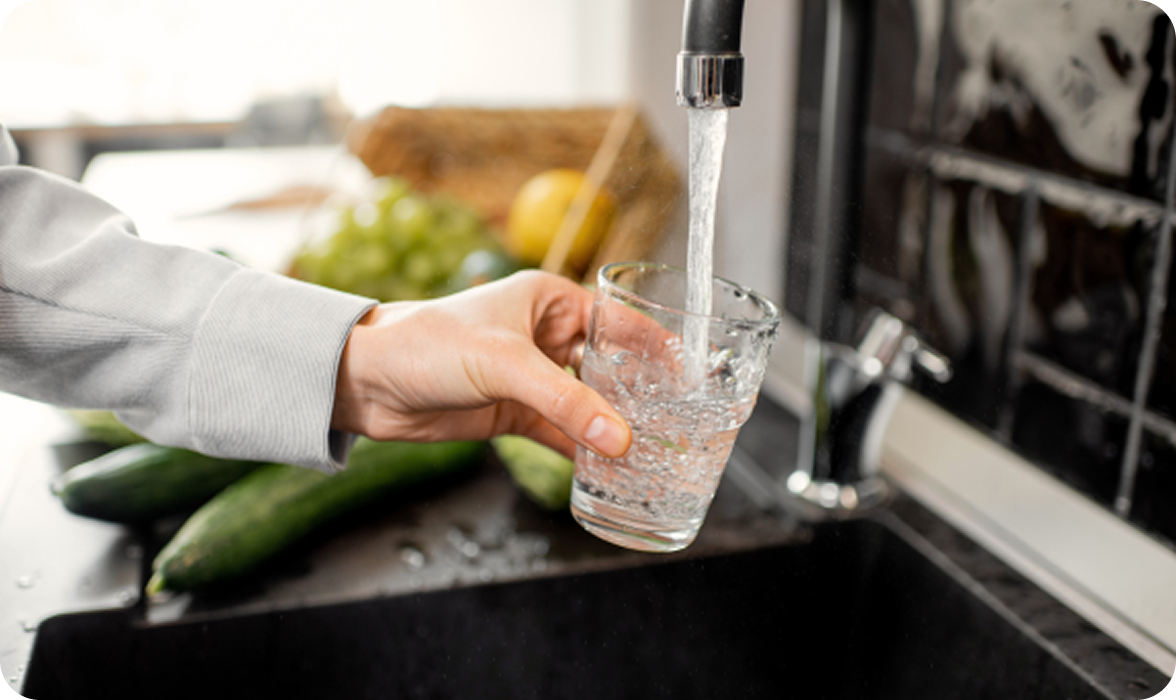

In your Canadian homes, offices, and industries, water flowing from your taps may look clear, clean, pure, fresh, and safe, but it may be hard water that can harm your skin, hair, and expensive appliances. The presence of high levels of minerals such as calcium and magnesium may cause this hardness.
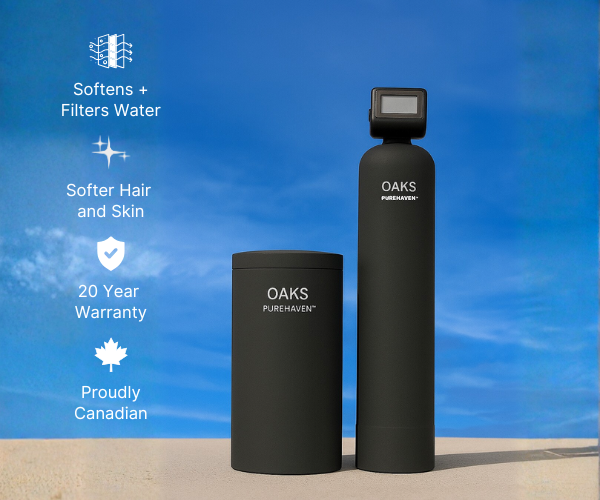
To prevent all the problems caused by hard water, you have to install an Oaks water softener in your home. Water softeners can be salt-based or saltless, working on the principle of ion exchange and changing the condition of minerals to solve problems arising from hard water.
You need to understand how each water softener system works before choosing one.
What Is Hard Water?
Hard water is the available municipal or groundwater that may contain a high concentration of minerals, especially calcium and magnesium. It may cause dry skin, frizzy hair, and white scale buildup on tiles and in your household appliances.
What Is a Water Softener System?
It’s a water treatment system that may soften your hard water by removing excess minerals or conditioning them. A whole home water softener system could be of two types:
- Salt-based water softener system
- Salt-less water softener system
Both of them work on different principles.
A salt-less water softener system is just a water conditioner that converts dissolved minerals into microcrystals that flow smoothly through water and do not attach to skin, hair, or appliances, preventing scale buildup.
A salt-based water softener system is a true water softener that removes calcium and magnesium by ion exchange.
How Does a Salt-based Water Softener System Work?
A salt-based water softener basically works on the principle of the ion-exchange method. It has a resin tank containing a lot of negatively charged resin beads. When water flows through this tank, the positively charged calcium and magnesium ions are attracted to the resin beads and attach to them. In return, resin beads release sodium in water. In this way, the water becomes soft, free of calcium and magnesium.
Resin beads do not accumulate for a long time. When it becomes saturated with minerals, it undergoes a regeneration process in which the accumulated minerals are flushed from the beads, and it is rinsed with a brine solution that attaches sodium to it. It reprepares the beads to soften the water.
Main Components of a Water Softener System
- Resin Tank – Where ion exchange happens in resin beads
- Brine Tank – Holds salt to produce the brine solution requires for regeneration
- Control Valve – Measures water usage and manages regeneration
Key Steps in the Water Softening Process
The whole water softening process includes the following steps:
- Hard water enters the resin tank, where it passes through the resin beads.
- Resin beads remove hardness minerals through the ion-exchange method.
- Soft water enters household plumbing to provide you with the best experience.
- The regeneration process takes place to restore the resin capacity.
How Water Softener Regeneration Works
The regeneration cycle is an automated process that prepares the system for efficient operation. It often takes place after every 4-7 days, taking 1-2 hours for the entire process. In this process, the resin beads become cleaner, allowing for better working. The resin beads are flushed off to remove accumulated calcium and magnesium, and then rinsed with a brine solution.
The regeneration frequency differs across systems. Depending upon the regeneration process, systems are divided into two types:
- Time-Based Water Softener Systems – Regenerate on a defined schedule, sometimes wasting salt and water due to over-regeneration, and causing hard water to enter your plumbing system due to under-regeneration.
- Demand-Initiated Water Softener Systems – Regenerate based on actual water usage, which improves efficiency.
What Do Water Softeners Remove?
Water softeners remove calcium and magnesium, which are the primary causes of water hardness. Some of the dissolved metals may also be removed during ion-exchange. But it does not remove other contaminants, such as bacteria, viruses, chlorine, and microplastics.
Is Soft Water Safe to Drink?
To decide whether you can drink soft water or not, you have to test your water. If your water contains only calcium and magnesium, which may cause hardness, the softened water is safe to drink.
If your water contains other contaminants, it is recommended to install an Oaks two-in-one water softener and filtration system to enjoy cleaner, healthier, hotel-quality water.
Benefits of Installing a Water Softener
Installing a water softener proves long-term cost savings as it provides you with a better experience, along with a lot of other benefits:
- Longer appliance lifespan
- Improved energy and water efficiency
- Softer skin and hair
- Cleaner dishes
- Brighter laundry
- Reduced soap and detergent usage
For homeowners dealing with hard water in the GTA, a water softener system in Toronto can help reduce calcium and magnesium buildup, protect household appliances, and improve everyday cleaning.
Potential Downsides and Considerations
While discovering the working of a water softener, you need to know about some downsides and considerations for the best experience:
- Use high-quality salt and refill it when it needs to be.
- The system could be costly, but it is cost-saving in the long run.
- The regeneration process includes wastewater discharge, including brine discharge.
- Sodium is added to your water during the softening process. If your family is allergic to sodium, use potassium chloride as an alternative to sodium chloride.
- Always check local regulations and plumbing codes before installing any system, as brine discharge is banned in some Canadian areas.
Water Softener vs. Reverse Osmosis vs. Whole House Filters
Water treatment systems differ in their working principles and their capacities to remove minerals and contaminants. It could be a water filter or a softener. The following are the common Oaks water treatment systems:
- Water softeners – Remove hardness minerals, i.e., calcium and magnesium.
- Reverse osmosis – Removes dissolved contaminants from drinking water.
- Whole house filter – Removes sediment, chlorine, and other minerals and contaminants, depending upon the filtration stages used in it.
How Much Does a Water Softener Cost?
The cost of the water softener system depends on its size and the technology used. It typically falls between hundreds and several thousand dollars.
The whole-house water softener costs $3000-$4000, whereas an under-sink water softener system costs $1000-$2000.
How to Maintain a Water Softener System
Like every system, a water softener system also needs proper and timely maintenance for proper working.
The water softener’s maintenance includes:
- Salt check: Quality and Quantity of salt
- Cleaning the brine tank
- Breaking the salt bridges
- Removing the salt mush
- Testing the hardness annually
If you live in Oakville and are considering a solution for hard water, explore our water softener system in Oakville to learn more about options for your home’s water softening needs.
Do You Need a Water Softener?
If you are facing problems with limescale buildup in your appliances, dry skin, soap scum, stiff laundry, and high energy and water bills, you need to install a water softener in your home to enjoy soft, hotel-quality water.
It is recommended to contact an Oaks professional for installing the best system according to your needs.
Conclusion
To understand the working principle of a water softener is important for the satisfaction and peace of mind of the homeowners. They need to know how the ion-exchange method removes calcium and magnesium to provide you with better quality water.
The working principle also makes you aware of the maintenance of your system to provide you with a longer lifespan of the system, which proves long-term cost savings along with efficient working.