Water softener regeneration is a process that ensures the system functions properly by cleaning the resin beads that capture calcium and magnesium. When the resin becomes saturated, it needs to be flushed. In the regeneration cycle, the resin bed is flushed with a brine solution to restore its softening capacity.
Since every Canadian family needs to install a water softener system to enjoy soft water, they should know how often should a water softener regenerate?
Most of the water softeners regenerate every 4-7 days. But the regeneration frequency depends on water hardness level, water usage, softener grain capacity, and control valve type.
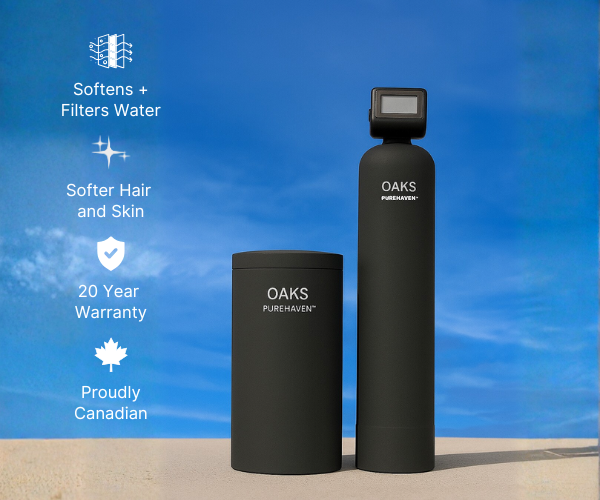
Modern Oaks Water Softener Systems are meter-based, which makes them more efficient and prevents under- or over-regeneration cycles.
What is Water Softener Regeneration?
In simple terms, the regeneration cycle is the process that restores the system’s capacity to provide clean water continuously.
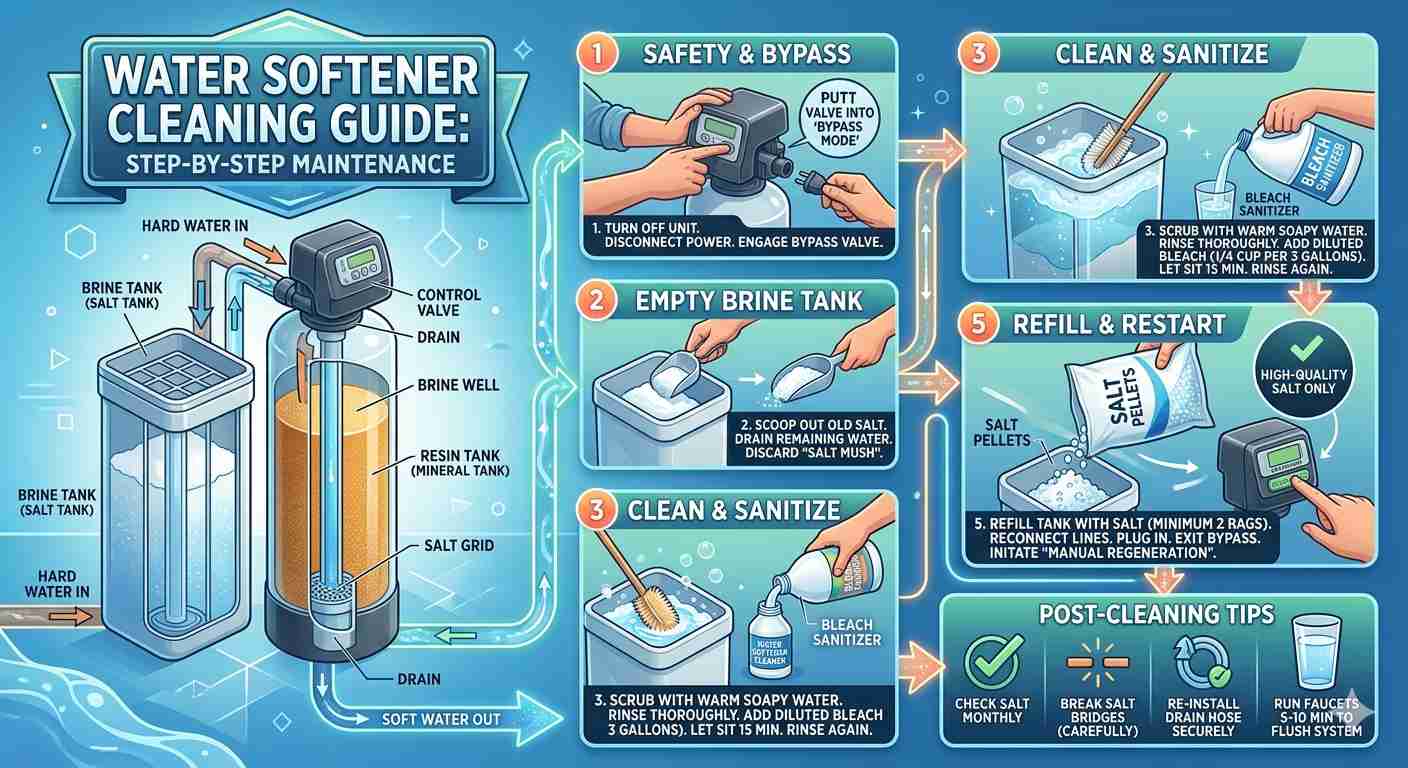
The working principle of a water softener is ion exchange. The resin beads contain sodium; when water comes into contact with them, it attracts calcium and magnesium, releasing sodium in exchange. When saturated with calcium and magnesium, the regeneration cycle allows the brine solution to restore sodium to the resin bed and flush out calcium and magnesium in the drainage water.
Stages of the Regeneration Process
The regeneration process includes the following stages:
- Backwash
The first step in the regeneration cycle is to flush out sediment, calcium, and magnesium. This step prepares the resin bed for sodium restoration.
- Brine draw
The system pulls brine solution from the brine tank and restores sodium onto the resin beads.
- Rinse
Fresh water flows through the resin bed to rinse away excess brine and other contaminants.
- Refill
The brine tank refills with water, allowing the salt to dissolve and preparing the brine solution for the next regeneration cycle.
Average Regeneration Frequency
Most of the water softeners regenerate every 4-7 days. These are time-based systems that do not account for water usage, water hardness, or family size.
Sometimes they regenerate more frequently, and they need to deal with increased water and salt waste, along with higher energy consumption. On the other hand, they may regenerate too late, leading to a return of water hardness.
You need to test your water and estimate your water usage to fix the regeneration frequency of your Oaks whole house water softener system. The estimated regeneration frequency should be:
- For Moderate homes (3-5 person): every 3–4 days
- For Lower usage homes (1-2 person): 5–10 days
- For very hard water areas (20+ grains per gallon): 1–3 days
- Demand systems: regenerate after 500–1,500 gallons
The Exact Formula to Calculate Regeneration Frequency
You may estimate the regeneration frequency from a simple guide. Still, if you are more conscious of knowing the exact duration, you should calculate it by using the exact formula given below:
Step 1: Test Water Hardness (GPG)
First, test the water hardness level in grains per gallon (GPG). You may test it with a home water test kit or have a lab test it.
Step 2: Calculate Daily Water Usage
Calculate your daily water usage. You should calculate according to 60-80 gallons per person per day. If you have 5 persons in your home it means your daily water usage is 300-400 gallons per day.
Step 3: Know Your Softener’s Grain Capacity
Know the softener’s grain capacity, which means how many grains your system can hold before your resin bed becomes saturated. Most systems have a capacity of 24,000 grains, 30,000 grains, or up to 64,000 grains.
Formula:
After knowing all the values, you may use the following formulas to know the exact regeneration frequency time period.
Capacity ÷ Hardness = Gallons Per Cycle
Gallons Per Cycle ÷ Daily Usage = Days Between Regeneration
For example, your water hardness level is 20 GPG, your water usage is 300 Gallons per day, and your system’s grain capacity is 30,000 grains. Then, your system needs to regenerate after 5 days.
30000 grains /20 GPG = 1500 gallons per cycle
1500/300= 5 days
Quick Regeneration Reference Chart
Assuming a 30,000-grain system and a family of four person, the regeneration frequency would be changed according to the hardness level according to the given chart:
| Water Hardness Level (GPG) | Regeneration Frequency (days) |
|---|---|
| 10 | 7-10 |
| 20 | 4-6 |
| 30 | 2-4 |
| 40+ | 1-3 |
Timed vs. Metered Water Softeners
In addition to water usage and water hardness level, the control valve technology also affects the regeneration frequency. Water softeners are divided into two types based on control valve technology:
Timed System
The timed system works according to a timeline set during installation. Such a system does not account for water usage. It just regenerates, regardless of whether the resin beads are fully exhausted. It may waste almost 30-50% salt annually. Sometimes it regenerates too early, and sometimes it regenerates too late.
Metered (Demand-Initiated) System
A metered system is a demand-initiated system that tracks the actual gallons used. It regenerates only when the system needs to be. In this way, it saves on salt and water use while reducing energy consumption. It automatically adjusts to lifestyle changes.
Compared to the timed system, the metered system is more efficient because it relies on smarter regeneration rather than more cycles. It maintains continuous soft water regeneration, which is the homeowners’ top priority for best experience and peace of mind.
How Long Does Water Softener Regeneration Take?
Most of the water softener systems need 1-2 hours for the entire regeneration cycle. The time duration also depends on the system type and its size.
Backwash requires 15-20 minutes. Brine draw requires 30-60 minutes. Water rinsing requires 5-15 minutes. Brine tank refilling completes in 5-10 minutes.
In most systems, it is scheduled overnight and occurs around 2 am or at the time set during the water softener installation.
You can use water during regeneration, but this depends on your system type and the number of brine tanks. In a single-tank system, you get hard water during regeneration, whereas a dual-tank system provides soft water continuously, even during regeneration.
What Happens If It Regenerates Too Often?
Sometimes, the system regenerates too often than necessary. The main causes are oversized timer programming, incorrect hardness settings, and older technology. The cause could be any, but over-regeneration has a lot of effects:
- Excessive salt usage (10–20 extra bags annually)
- Higher water and electricity bills
- Increased wastewater discharge
- Early wearing out of control valves
- Bad environmental impact due to the excess discharge of brine in drainage water
What Happens If It Doesn’t Regenerate Enough?
Sometimes, the system does not take into account water usage and does not regenerate enough. It means it regenerates later than it needs to be. It is caused by faulty system settings. It may lead to:
- Hard water returning
- More soap and shampoo consumption
- Dry skin and frizzy hair
- Spots on dishes on tiles
- Scale buildup in heaters and other appliances
- Reduction of appliance lifespan
- Resin fouling risk
Signs Your Regeneration Settings Are Wrong
There are some signs, through which you may know that your system’s regeneration settings are wrong, i.e., it is regenerating more or less than it needs to.
- Water feels hard again
- Salt level doesn’t decrease if the system is not regenerating enough
- System regenerates daily if the system is regenerating too often
- White buildup on fixtures due to hard water returning
- Dry skin or dull laundry
- Error codes on the control panel due to wrong settings
How to Optimize the System for Maximum Efficiency
A properly optimized water softener system may give you the best results, along with saving your money, reducing salt and water usage, and protecting your appliances. You may optimize your system by following these guidelines:
- Test water hardness annually
- Recalculate water usage after household changes
- Use high-purity and the best salt suggested by professionals
- Break salt bridges and mush regularly
- Clean the brine tank every 6-12 months
- Upgrade to a metered system if outdated to maintain the regeneration frequency
- Schedule a professional inspection every year or whenever needed
Conclusion
Regeneration is very important for a water softener to work properly. It is very important that your system regenerates at an accurate frequency.
Most of the systems installed in average homes regenerate every 4-7 days. But any faulty settings may result in an incorrect regeneration frequency, not only disrupting your budget but also leading to hard water returning. To prevent all these problems, you should set the regeneration frequency wisely after testing your water hardness, water usage, and system capacity.
For professional assistance with installing and optimizing your system to meet your needs, feel free to contact Oaks Wellness Water.