Concerned About Your Well Water Quality?

In Canada, people use municipal water or underground well water. Municipal water is filtered at treatment plants, but underground well water is not treated.
Well water is considered clear and clean as it comes from the deep underground sources. But clear water does not mean pure water; it may contain many contaminants that can’t be seen, smelled, or tasted.
As most Canadian homes use well water, which often contains contaminants, they need to install an OAKS well water filtration system for their comfort and health.
What Is a Well Water Filtration System?
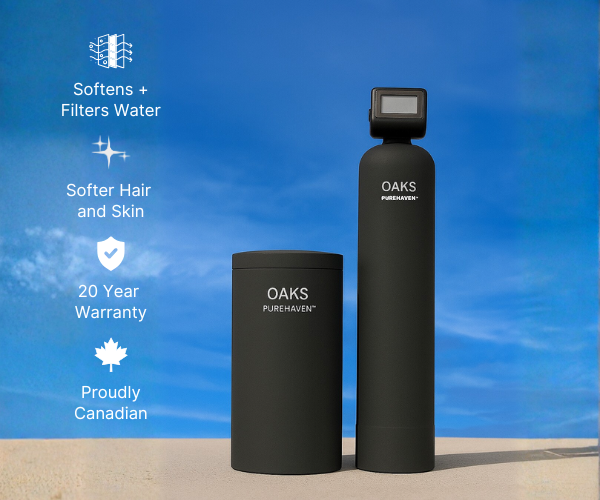
An OAKS well water filtration system is specially designed to remove contaminants and unwanted minerals from underground water.
The well water filtration system can be installed at the main water line to filter water for the whole house, or at the point of use for filtered, healthy water.
Well water filtration systems use different physical, chemical, or biological processes to filter water by removing various contaminants.
Why Well Water Needs Filtration
Well water may be considered as clean water as it is apparently clear, but it needs filtration due to the following factors:
1. No Government Treatment
In Canada, city water is well treated before reaching your homes, but well water comes directly from underground and is not regulated by any government treatment.
2. Invisible Contaminants
One of the major problems with well water is the presence of undetectable odorless, colorless, tasteless sediments, salts, minerals, bacteria, viruses, microplastics, and other contaminants. Some of the harmful metals, like arsenic, lead, and nitrates, are also present in it, which may cause long-term health issues.
3. Environmental Exposure
Well water is directly influenced by contaminants, natural minerals, agricultural runoff (such as pesticides and fertilizers), and sewage leaks or flooding.
4. Bacterial Risks
There are some bacterial risks in groundwater due to flooding, rainfall, and soil moisture. The most commonly found bacteria are E. coli and coliforms, as well as some parasites that may cause severe health issues. So, you need to remove these microorganisms from the well water before using it.
Find your perfect system.
Your local Oaks experts will provide personalized recommendations for the right solution for your home.
Common Well Water Contaminants and Their Effects
Different types of contaminants present in the well water have bad effects on human health and households.
Heavy Metals
Well water may have some common heavy metals in it:
Lead: It may cause developmental issues in children.
Iron: It may give a metallic taste and cause rusting in household items, leading to poor laundry and cleaning.
Manganese: It may cause black or brown staining on tiles and clothes.
Hydrogen Sulphide: it may give a rotten-egg smell and be unbearable to drink and use for household chores.
Microorganisms
The microorganisms, such as bacteria, viruses, and parasites, present in well water may cause severe human illness, including stomach cramps, diarrhea, and infections.
Sediments
The sand, silt, and dirt may give your water a sandy taste, clog plumbing, and shorten the lifespan of household appliances.
Chemicals
Some chemicals, such as pesticides, nitrates, and industrial waste, present in well water due to land runoff may cause severe health issues in children and adults.
How a Well Water Filtration System Works
OAKS’s well water filtration system is a multi-stage system that uses three types of different filtration methods to remove different contaminants.
- Physical filtration traps contaminants such as dirt, sand, rust flakes, and debris.
- Chemical filtration neutralizes contaminants and metals through air injection or oxidation processes.
- Biological/UV treatment kills or deactivates microorganisms.
How These Methods Work Together: A Multi-Stage System
In a multi-stage filtration system, all three filtration methods are used in different filters to provide you with pure water.
- Sediment filters with 1-5 micron cartridges trap sand, dirt, and debris, preventing clogging in appliances.
- A carbon filter treats water for low levels of metals, hydrogen sulfide, and some taste and odor issues, but it is not effective for high levels of iron or manganese.
- GreenSand or Brim Media oxidizes iron and manganese present in well water.
- A water softener with a capacity of 32,000 grains removes extra calcium and magnesium from well water.
- A UV purification system removes bacteria, parasitic cysts, and viruses from water using UV light.
Find your perfect system.
Your local Oaks experts will provide personalized recommendations for the right solution for your home.
Common Problems without Filtration
If you don’t filter your well water, you may face the following issues that may disturb your comfort zone:
- Bad taste and smell of water
- Cloudy or discolored water
- Appliance damage and reduced lifespan of appliances
- Skin irritation
- Plumbing and cleaning issues
- Health risks
Benefits of a Well Water Filtration System
Installation of OAKS well water filters could be expensive, as it costs between $8000-$10000 but it provides you with a lot of unnoticeable benefits:
- Safe drinking water
- Improved taste and odor
- Protection from invisible contaminants
- Longer appliance lifespan
- Reduced the maintenance costs of appliances
- Better cleaning and bathing experience
- Peace of mind and comfort
How to Choose the Right Well Water Filtration System
Installing a water filtration system is an important decision that requires your careful attention. You need to follow the following steps:
- First, test your water to identify contaminants and determine which filtration stages you need to add to your system.
- Decide whether you want whole-house or point-of-use well water filters, based on your needs and preferences.
- Check the water hardness level to decide whether to install a water softener along with a filter.
- Consider household size and water usage to decide the system size.
- Consider the flow rate (GPM) that must be matched to household demand; it is typically 8–12 GPM for residential systems.
- If your water is hard and contains bacteria and metals, choose a multi-stage system.
- Set a realistic budget for installing the system, including maintenance costs.
It is recommended to consult with an OAKS professional to customize a system according to your needs for the best experience.
Conclusion
Your well water may pose significant health risks to you and your family. It may also disturb your household. It is very important to install well water filters in Canadian homes if you use underground water.
Always test your water to check for contaminants, estimate your household size and water use, and choose the best OAKS filtration system to provide you with clearer, healthier water.
Find your perfect system.
Your local Oaks experts will provide personalized recommendations for the right solution for your home.
FAQs
Is well water safe without filtration?
No, well water is not safe without filtration due to contaminants, excess minerals, metals, and microorganisms.
How often should I test my well water?
You should test your well water every 6-12 months to determine the type and level of contamination.
What is the best filtration system for well water?
An OAKS well water filtration system with a sediment filter, a metal filter, a water softener, and UV filters is best for well water for a better experience to provide you with cleaner, healthier, and hotel-quality water.
Do I need a water softener for well water?
Yes, in Canada, groundwater is rich in magnesium and calcium due to the region’s geology. So, you need a water softener for well water to remove extra minerals.
Can filtration remove bacteria?
Yes, ultra-filtration membranes with very tiny pores and a UV purification system used in filters can remove bacteria.
How long do filters last?
Each type of filter used in OAKS well water filters requires different maintenance. Sediment filters need to be changed every 3-6 months. The water softener brine tank should be cleaned periodically, and the UV lamp should be replaced annually.
Written by Joseph Mroueh
Joseph, founder of Oaks, develops high-quality whole-home and drinking-water filtration systems. He focuses on delivering reliable, clean, and safe water solutions for modern households.
Share