Upgrade to Cleaner Water Throughout Your Home
Concerns about water quality in Ontario are growing day by day. A lot of people have complaints like a chlorine smell, dry skin, an itchy scalp, frizzy hair, and less soap scum after bathing.
People are becoming more conscious of their appearance, skin, and hair health. It is the reason that shower head filters are becoming more popular.
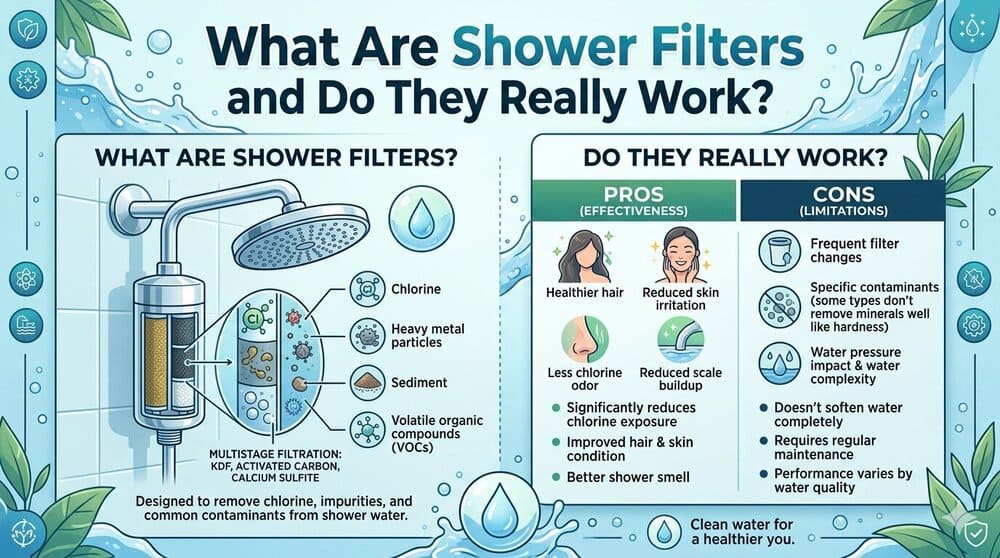
Shower head filters are compact, inexpensive filters you can find in different sizes, used to remove chlorine, sand, rust, and sometimes heavy metals like lead and iron. They are specifically made to filter the water you use for showering and to provide you with the best bathing experience.
If your water contains just chlorine and some other contaminants and you are concerned about having a better bathing experience, a shower head water filtration system can be a good choice. Otherwise, if you are concerned about the water in the whole house, it is recommended to choose the OAKS whole-house water filtration system.
What Is a Shower Filter?
A shower water filter is a water treatment system usually attached to a showerhead that removes odor-causing chlorine and other contaminants, improving the shower experience and helping keep your skin and hair smooth.
Shower head filters are divided into two types based on the placement of the filter:
- Inline filters
In these shower filters, the filter media is installed between the shower pipeline and shower head.
- Filtered showerheads
It is a shower head and shower filtration system in a single unit, directly installed with the pipeline.
The common filtration media used in shower filters are:
- Activated carbon
It is used to remove chlorine and other contaminants from the available water before it reaches you.
- KDF (Kinetic Degradation Fluxion)
It is made up of copper and zinc and used to remove chlorine.
- Calcium sulfite
It is beneficial to remove chlorine from the hot water.
- Vitamin C filters
It is used to make the chlorine and chloramines ineffective.
Find your perfect system.
Your local Oaks experts will provide personalized recommendations for the right solution for your home.
How Do Shower Filters Work?
The shower water filters work on a very simple principle. Water gets filtered just by passing through different filtration media.
Water passes through the filter cartridge; chlorine is reduced through chemical reactions with filter media; sediments, sand, and dust particles get trapped in the filters, and sometimes heavy metals also get stuck in the filters. In this way, the showerhead water filters provide you with cleaner water.
In simple words, a filter showerhead is a small water treatment system that treats water before it reaches your hair and skin. But if you want to use a shower head filter for hard water, it is not a good choice.
What Contaminants Can Shower Filters Remove?
The following are the contaminants that can be removed by a water-filtering showerhead:
Chlorine
In most cases, chlorine is used to purify water and kill the germs in water. But the remaining chlorine in water may cause dry skin, frizzy hair, rashes, skin allergies, and bad odor in water.
Shower filters specifically work to remove chlorine from water and improve the water’s odor.
Sediment
Sediments, dirt, and rust particles make the bathing experience bad, and you feel rough skin after taking a bath in water with sediments in it.
A water filtration shower head also traps such type of particles.
Some Heavy Metals
Heavy metals may cause itchy skin and red spots, and prolonged contact may cause skin cancer.
Some modern shower filters can also remove heavy metals such as lead, mercury, copper, and iron.
The performance of a water filter in the shower head varies by filter quality and water conditions. You need to consider your needs before installing any of the shower filters in your bathroom.
What Shower Filters Cannot Remove?
Shower filters cannot remove all types of contaminants from water. The following are the contaminants that cannot be removed by a basic shower filter system:
Hard Water Minerals
The hardening minerals calcium and magnesium that make the water hard and cause scale buildup on plumbing surfaces, in appliances, and cause dry skin and frizzy hair cannot be removed by shower filters.
Now, some of the modern shower filters, called water softener shower heads or hard water shower filter, have an additional filter media that can somehow remove hardening minerals, but they are not 100 percent effective.
Dissolved Solids (TDS)
Shower filters have no technology to remove any type of dissolved solids from water.
Complex Water Problems
If the available water contains high levels of heavy metals like sulfur and iron, as well as bacteria and viruses, shower filters cannot remove them.
If you think that a shower filter is enough for everything, it’s just an illusion. If you want the best experience, you need to install a combination of a shower filter and an OAKS water softener, or a single system called a whole-house water filtration system.
Benefits of Using a Shower Filter
The following are the benefits of using a shower filter that you can experience right after fitting it in your bathroom:
- Healthier-looking hair with less dryness and less color fading
- Softer skin with reduced irritation and better moisture retention after a shower
- Reduced chlorine exposure to your body
- Better shower experience with improved water smells and cleaner-feeling water
- Affordable solution to better bathing experience with easy installation
Find your perfect system.
Your local Oaks experts will provide personalized recommendations for the right solution for your home.
Shower Filter vs. Water Softener: Which One Do You Need?
A shower filter can never be a water softener. Here is a quick comparison of a shower filter vs. a water softener:
Water Issue | Shower Filter | Water Softener |
Chlorine | ✓ | Partial |
Sediment | ✓ | ✗ |
Hard Water | ✗ | ✓ |
Calcium & Magnesium | ✗ | ✓ |
Scale Buildup | ✗ | ✓ |
Whole Home Protection | ✗ | ✓ |
Neither of them can replace the other. It totally depends on your priorities.
Water filter for shower is the best choice for chlorine reduction in the water used for taking a bath. But it is a temporary solution. You may get fresh and smooth skin after taking a bath, but you may get your hands dry after washing on tap. It is an affordable compact-design water treatment system, but it just works for single-shower protection. The other limitation is that you cannot use a shower filter for hard water.
On the other hand, a water softener is for whole-house water treatment. It can treat hard water, which will protect appliances from scale buildup in them, and you don’t need to spend on maintenance of valuable appliances; hence, it is a long-term savings plan for your home.
Are Shower Filters Worth It?
To decide whether the shower filter is worth it, you need to consider your needs. If your only concern is chlorine, a shower filter is the best choice. Like every other system, it comes with some pros and cons:
Pros
- Affordable
- Easy installation
- Immediate results
- Better skin and hair comfort
Cons
- Frequent filter replacement
- Limited filtration
- Does not solve hard water’s problem
How Long Do Shower Filters Last?
A water filter for a shower head is an inexpensive and immediate solution, but its average lifespan is only 3-6 months.
There are some factors that affect its longevity:
- Water usage
- Water quality
- Filter type
There are some signs that warn you that it’s time to replace your water filtration system for a shower head:
- Return of a chlorine-like smell
- Reduced water pressure in the shower
- Dry skin and frizzy hair returning
How to Choose the Best Shower Filter?
Before investing in a shower filter, it is recommended to test your water to determine whether you need a shower filter, a water softener, or a whole-house water filtration system. If you are sure to buy the shower filter for your bathroom, you need to consider some factors:
- Certifications of the company or system
- Filter media types installed in the system
- Replacement cost of shower filter
- Flow rate of water
- Compatibility with the size of shower heads
Final Verdict: Do Shower Filters Really Work?
Shower filters really work to remove chlorine and some other contaminants, but they do not treat hard water. It can improve your bathing experience, but it is temporary and just a point-of-use solution. No doubt it is an inexpensive system, but it needs to be replaced again and again.
It is recommended to choose the best water treatment system or combination of two after testing your water, analyzing your needs, and assessing your water usage.
If you are confused about choosing among a shower filter, a water softener, and a whole-house water filtration system, feel free to contact our OAKS experts for professional advice and free home water testing.
Find your perfect system.
Your local Oaks experts will provide personalized recommendations for the right solution for your home.
FAQs
What does a shower filter actually remove from water?
Shower filters remove chlorine, sand, rust, and sometimes heavy metals like iron and lead from the available water. It also removes unpleasant odors from the water, improving your bathing experience.
Do shower filters remove chlorine completely?
Most shower filters remove most of the chlorine from water, but 100 percent chlorine cannot be removed by it. Its efficiency is entirely dependent on the filtration media type, chlorine level, and the system’s quality.
Can a shower filter soften hard water?
No, a shower filter cannot soften hard water. If you want to get soft water by removing chlorine and magnesium from water, it is recommended to install a water softener for best results.
Are shower filters good for skin and hair?
Yes, shower filters are good for skin as they provide you with cleaner water after removing a lot of contaminants from your water. Most consumers feel that after installing shower filters, they have smoother skin and hair.
How often should a shower filter be replaced?
It is recommended to change the shower filter every 3-6 months, but this timeline is also dependent on the water usage, water quality, and chlorine level. If you smell bad chlorine in the water or feel that the water pressure has been reduced, you need to replace the filter.
Is a shower filter better than a water softener?
It is entirely dependent on your choices.
If you are worried about chlorine smell, dry skin, and frizzy hair, a shower filter could be a better choice. If you want to install a water treatment system to soften the water and get rid of scale buildup in appliances, you need to install a water softener in your home.
Written by Joseph Mroueh
Joseph, founder of Oaks, develops high-quality whole-home and drinking-water filtration systems. He focuses on delivering reliable, clean, and safe water solutions for modern households.
Share