
Water testing is an important step towards safe drinking water. Clean water is a necessity for everyone. It is never a luxury. But unfortunately, it is not really accessible to Ontario people easily. Your water may look cleaner and purer at first sight, but it may have a lot of contaminants that we use daily along with our water. These contaminants not only disturb our health but also affect our appliances.
The hidden contaminants include PFAS, heavy metals, calcium, magnesium, microplastics, bacteria, and floods, etc.
Before using the water, you need to run a water quality test to assess the drinking water quality. You should know how to check water quality. If you have any problems with the water quality, Oaks is here to help you with professional water testing and to suggest an NSF-certified water treatment system.
How to test if water is safe to drink at home?
Water quality testing is very important to know about the impurities and contaminants present in available water so that you may find a proper solution to this problem. These are the following common water quality testing methods:
- DIY kits
- Professional testing
- Laboratory testing
With DIY kits, you can do your water test using the DIY method’s guidelines. Professional testing is done on-site to check water quality. For comprehensive and accurate testing, it is recommended to use laboratory testing that provides detailed information on contaminants such as calcium, magnesium, PFAS, microplastics, bacteria, and viruses.
Why Testing Your Water Quality Is Important
The invisible impurities and contaminants present in your Ontario water may not be obvious at first, but they may have a lot of effects, such as:
- Health risks in your family, especially for infants and older adults
- Plumbing damage due to scaling
- Appliance lifespan reduction
- Bad-tasting and odorous water
Commonly found water contaminants that need to be removed:
- PFAS
- Lead
- Chlorine
- Bacteria
- Hardness mineral
- Iron
It is very important to remove all these contaminants from your water to ensure your family’s safety, protect your plumbing, and improve your experience with water.
Signs Your Water Needs Testing
There are some alarming signs that tell you that you need water testing:
✔ Bad smell of water
✔ Metallic taste due to the presence of lead and iron
✔ Cloudy water due to silt and sand
✔ Hard water stains on tiles, laundry, and crockery
✔ Dry and rough skin
✔ Hair problems like frizzy and rough hair
✔ Plumbing corrosion and scale buildup in appliances
✔ White residue after washing
✔ Low water quality reports
When Should You Test Your Water?
There are some specific situations in which it is very necessary to test your water with a specific frequency. You need to assess all these situations correctly:
| Situation | Should You Test? | Frequency |
|---|---|---|
| New home | Yes | Immediately |
| Private well | Yes | Every year |
| Municipal water | Recommended | Every 1–2 years |
| Flooding | Yes | Immediately |
| Pregnancy | Yes | Before baby arrives |
| Plumbing replacement | Yes | After work |
| Strange smell | Yes | Immediately |
What Should You Test Your Water For?
There are different tests to check the different types of impurities in water:
Physical Tests
Physical tests may assess the physical impurities in water, such as color, odor, and turbidity.
Chemical Tests
Chemical tests may check the pH of water, water hardness, chlorine, lead, copper, iron, manganese, arsenic, and nitrates and their level in the available water.
Biological Tests
Biological tests are important for assessing the presence of total coliforms, E. coli, bacteria, pesticides, pharmaceuticals, and viruses in the water.
3 Best Ways to Test Water Quality
The following are the best ways for testing the water quality:
DIY Water Testing Kits
You may test your water by using a DIY kit or using water monitoring equipment at your home. You need to follow the guidelines properly. It contains some chemical reagents or strips. You need to test the water by dipping the test strips in it and matching the results to the kit guidelines.
Follow the steps given below:
- Collect a clean water sample.
- Follow instructions
- Wait the required time.
- Compare results
- Record findings
- Repeat if necessary
- Contact an expert for further advice if contaminants appear.
DIY water testing kit is easily accessible and easy to use, and you may get faster results. It is affordable, but it has lower accuracy and does not detect PFAS, microplastics, etc.
It is recommended to use this test when you want to check the pH, hardness level, and chlorine in your available water.
Professional Home Water Testing
In this method, the water specialist tests your water at your home, at the spot, within 30 minutes. It is also used to check the pH level, chlorine, hardness, mineral levels, TDS, and iron, etc in available water.
It is recommended as the experts provide you with accurate results. But for a detailed water test, you need to go for certified laboratory testing.
Certified Laboratory Testing
It is the most reliable and detailed water test, providing reports detailing each type of contaminant.
It includes:
- Sample collection
- Water testing
- Detailed reports
It could be expensive, but it is recommended to go for certified laboratory water testing for better results and experience.
Comparison Table of Different Tests
| Feature | DIY Kit | Professional | Lab Test |
|---|---|---|---|
| Cost | Low | Medium | High |
| Accuracy | Medium | High | Very High |
| Time | Minutes | 30 mins | 2–7 days |
| Detects bacteria | Limited | Yes | Yes |
| Detects PFAS | No | Sometimes | Yes |
| Best for | Quick check | Homeowners | Complete analysis |
Understanding Your Water Test Results
The professionals and laboratory reports may explain to you the meaning of each contaminant level in the water. But if you do DIY testing, you need to understand the water test results:
| Test | Safe Range | Meaning |
|---|---|---|
| pH | 6.5–8.5 | Water acidity |
| Hardness | <60 mg/L | Soft water |
| Lead | 0 ppm preferred | Toxic metal |
| Chlorine | 0.2–4 ppm | Disinfection |
| Nitrate | <10 mg/L | Safe for infants |
| TDS | 50–300 ppm | Water quality indicator |
DIY Water Test vs. Professional Testing
You may choose between DIY and professional testing by comparing both of them as:
| Feature | DIY | Professional |
|---|---|---|
| Accuracy | Moderate | High |
| Detects bacteria | Limited | Yes |
| Detects heavy metals | Limited | Yes |
| Interpretation | Self | Expert |
| Recommendations | No | Yes |
How Much Does Water Testing Cost?
Each water test incurs expenses and yields results proportional to those expenses. The highly expensive test may give you the best results, while the cheaper one may have some limitations. These prices may also change according to location and how detailed a test you want:
| Test Type | Average Cost (CAD) |
|---|---|
| DIY Water Test Kit | C$20–C$60 |
| Professional On-Site Water Testing | C$100–C$300 |
| Certified Laboratory Water Analysis | C$150–C$600+ |
What to Do If Your Water Fails the Test
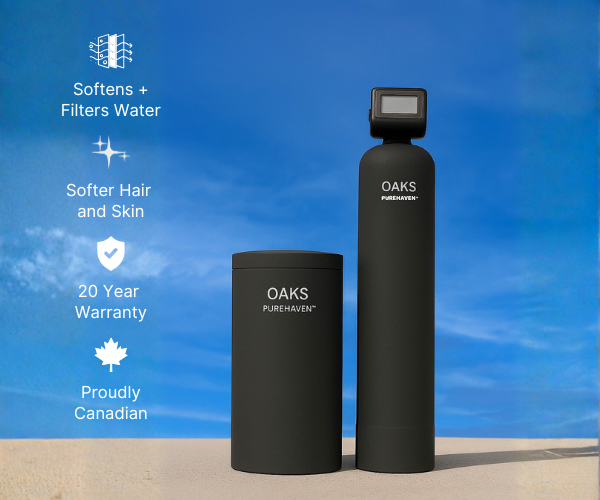
If your water fails the test, you need to install an Oaks water treatment system at your home or workplace. The following are solutions for different problems:
| Problem | Recommended Solution |
|---|---|
| Hard Water | Water Softener |
| Chlorine | Carbon Filter |
| Lead | Reverse Osmosis |
| PFAS | RO + Carbon Filter |
| Iron | Iron Filter |
| Bacteria | UV System |
| Sediment | Sediment Filter |
If you are worried about selecting the best system according to your needs. Feel free to contact an Oaks expert for professional advice and to install an NSF-certified tail water treatment system at your home for your family’s safety and the best experience.
Tips to Maintain Safe Drinking Water
Only once-in-a-lifetime water testing and installing a system are not enough. You need to regularly check drinking water quality. Always test drinking water, test well water, and test city water when the situation and seasons change.
You need to follow the following tips:
- Test water annually
- Replace filters every 3-6 months.
- Clean faucets every week.
- Flush stagnant water after cleaning.
- Maintain and clean plumbing regularly.
- Test after flooding, rain, and when the season changes.
- Monitor local water reports if using municipal water.
Conclusion
Water testing is very important for protecting your health and your family’s health. You need to choose the right water testing option based on your needs. Always review the results before selecting any treatment solution for the best experience.
It is recommended to conduct regular testing, which helps identify problems early and ensures safe, clean, and pure hotel-quality drinking water.
Feel free to contact Oaks professionals for free water testing at your home.