Water is essential to everyone without it, no one can even survive. Unfortunately, in Ontario and Toronto, it is not available in a cleaner and healthier form. There are many reasons for this poor cleanliness, but the main problem is the high levels of calcium and magnesium, which make the water hard.
Hard water can harm our valuable home appliances, as well as our skin, hair, and health. So, we need to install a water filtration system. Oaks Wellness Water makes it easier for you to manage this problem by installing two of the water filtration systems:
- Whole-house Water Filtration System
- Reverse Osmosis Water Filtration System
Both systems are used to provide you with clean, healthy, hotel-quality water. But they differ according to their usage, work, and installation.
It is important to understand Whole House Water Filter vs. Reverse Osmosis before installing any of them so that help homeowners can choose the right solution according to their needs.
What Is a Whole House Water Filter?
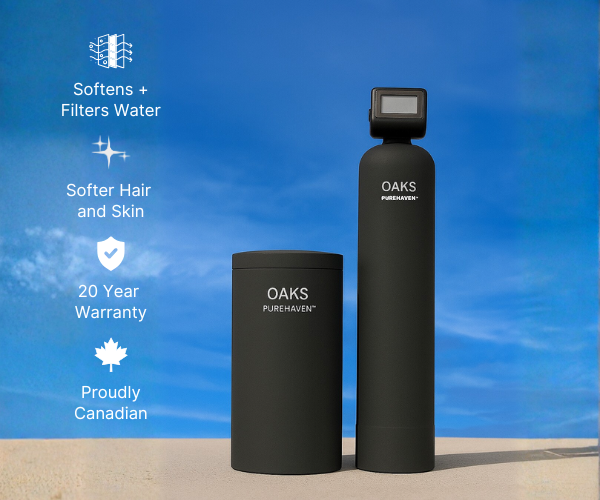
Whole House Water Filtration system, also called as point-of-entry-system, as it is installed at the entry point from where water enters the home. It is like a water tank with a size of almost 50’’.
Basically, it works by filtering each drop entering the home at its entry point. It filters all the water you use in your home, whether for drinking or cleaning. It includes common filtration stages, such as carbon and sediment filters.
It may:
- Clean the water by removing contaminants, chlorine, and other chemicals
- Improve the taste and odor of the water
- Like all other systems, a whole-house water filter has benefits and limitations.
Benefits of a Whole House Water Filter
The following are the benefits of a Whole House Water Filtration system:
Clean water at every tap
If you install a Whole House Water Filter in your home, it will provide you with clean and healthier water at every tap. It will provide you with clean water in your kitchen for drinking, as well as throughout your whole house for bathing and cleaning.
Better skin, hair, and bathing water
It will give you better bathing water, enhancing the beauty of your skin and hair. If you use hard water for bathing, your skin gets dry and itchy, and your hair gets frizzy, but a Whole House Water Filter gives you clean water for bathing.
Protects plumbing and appliances
Hard water can affect your plumbing and valuable appliances by forming scales and deposits in pipes. Whereas clean water from a whole-house water filter protects your appliances from mineral scaling and extends their lifespan. It saves you money and time from having to maintain these things again and again.
No wastewater produced
If you use other water filtration systems, a lot of wastewater is produced, whereas a whole-house water filtration system does not produce much wastewater.
Limitations of Whole House Filters
The following are the limitations of the Whole House Filtration system:
Not good for ultra-pure drinking water
It can provide clean water for the whole house, which is best for laundry and bathing, but it does not remove all the chemicals i.e., dissolved contaminants and heavy metals etc from the water, so it does not provide ultra-pure drinking water.
Limited removal of dissolved solids and heavy metals
It removes the minerals that make the water hard and some sediment, but does not remove the dissolved solids and heavy metals that are really harmful to human health and cannot be used for drinking. So, a separate filtration system is required for drinking and cooking.
Filter replacements required
After a specific span of time, filter replacements are required for a better experience.
What Is a Reverse Osmosis (RO) System?
An RO water filtration system, also called a Point-of-Use system, is fixed at a specific point where you need clean water. It is small and usually installed under the sink, as it is used to clean the water used for drinking and cooking.
Basically, it works against osmotic pressure by using a semi-permeable membrane that separates clean water from the contaminants.
Usually, it uses only one RO membrane, but sometimes it has more than one filtration stage:
- Pre-filters:
The filtration membrane installed before the RO membrane removes sediments and some salts.
- RO membrane:
The main filtration membrane works against Osmotic pressure and removes extra minerals that make water hard, pesticides, dissolved salts, and metals.
- Post- carbon filter:
The filter installed after the RO membrane works to remove any of the contamination left behind after passing through the RO membrane.
Benefits of Reverse Osmosis Systems
The following are the benefits of the RO system:
Extremely high contaminant removal
It uses more than one filtration stage, so it not only does not soften the water but also removes all contaminants to make it pure and hotel-quality water.
Ideal for drinking and cooking water
The RO system removes all types of contaminants from the water, so it is ideal for drinking and cooking.
Improves taste and odor
If the water has a bad taste and odor due to impurities, the RO system improves its taste and odor by providing the best-quality water.
Removes heavy metals, nitrates, fluoride, and more
It not only removes chlorine and magnesium to soften the water, but also removes heavy metals, nitrates, fluorides, arsenic, and pesticides that are really harmful to human health.
Limitations of Reverse Osmosis Systems
The following are the limitations of Reverse Osmosis Systems:
Treats water at one location only
It is usually installed under the sink and treats water at only one point, for cooking and drinking. If installed elsewhere, it will be used only for that location’s specific purpose. It does not cover the entire house with a single system. If you want to use it for whole household chores, you would have to install a big system which is not budget-friendly.
Produces wastewater
As it works against osmotic pressure, it produces a large volume of wastewater while removing contaminants.
Slower flow rate
It needs high pressure of water but provides a very slow flow rate of clean water. It needs an extra tank for smooth use.
Requires regular maintenance
Its pumps and vessels last for 10-15 years, but its RO membrane, pre-filters, and post filters require regular maintenance that needs your time as well as it disturbs your budget.
Find your perfect system.
Your local Oaks experts will provide personalized recommendations for the right solution for your home.
Whole House Water Filter vs. Reverse Osmosis — Key Differences
The following are the key differences between Whole house water filter and a Reverse Osmosis System:
Filtration coverage
A whole-house water filter serves the entire house and provides clean water at every tap for drinking, cooking, laundry, and bathing, whereas an RO system serves only one tap and usually provides clean, pure water for drinking and cooking.
Contaminant removal capability
A whole-house water filter removes calcium and magnesium to make water soft, but does not remove dissolved or microscopic contaminants, which is not good for drinking. On the other hand, RO systems remove all types of contaminants, making water cleaner and hotel-quality, ideal for drinking.
Water pressure and flow rate
A whole house water filter can work with low water pressure and provide a good flow rate. But, the RO system requires high water pressure to work and provides a low flow rate.
Installation and space requirements
A whole house water filter is installed at the water entry point, and it is a big system that requires more space for installation. But the RO system is usually installed under the sink and requires a small space.
Maintenance
A whole-house water filter requires maintenance after 5-10 years and RO system requires maintenance every 2-5 years, and the pump requires maintenance every 10-15 years.
Operating costs
The whole system requires relatively more operating cost than the RO system.
Comparison Table (Quick Overview)
|
Basis of Difference |
Whole-house Water Filter |
RO System |
|
System Coverage |
Whole house |
Only one tap |
|
Contaminants removed |
calcium, magnesium, chlorides, dust, rust, pesticides and herbicides |
calcium, magnesium, chlorides, dust, pesticides, all dissolved microscopic contaminants |
|
Best use cases |
Laundry, bathing, cleaning purposes |
Drinking and cooking purposes |
|
Cost range |
Relatively high |
Relatively low |
|
Maintenance needs |
Every 5-10 years |
Membranes: Every 2-5 years Pump: every 10-15 years |
Which System Is Right for Your Home?
The following are the factors you need to consider before choosing the right option for your home:
- Water Quality you are getting (Contaminants in available water)
- Household size
- Budget
- Goals (Water quality you need and for what purpose you want to clean water)
Choose a whole-house filter if you want clean water at every tap in the house and for household chores, i.e., drinking, cooking, laundry, and cleaning.
Choose an RO system if your top priority is pure water for drinking and cooking.
Can You Use Both Systems Together?
You may choose a hybrid of both systems according to your needs and budget. Install Whole House Water Filter for all other purposes and a separate under-sink RO system for drinking and cooking purposes.
It would provide you with the best protection, as hard water can damage your appliances, pipes, tiles, skin, and hair, while the whole-house water system provides soft water. Whereas an RO System provides hotel-quality water for drinking and cooking purposes.
Summary
The whole house water filter differs from the RO system in a lot of ways.
A whole-house water system is an expensive filtration system installed at the water entry point, covers more space, and cleans the water for every tap, but it is not ideal for drinking water, as it may soften the water but cannot purify it to an ideal drinking purpose.
On the other hand, an RO system is relatively cheaper to install at the point of use, usually an under-sink system that provides ideal drinking water by removing all microscopic contaminants.
Always choose the right system according to your needs, budget, and water quality, which should be tested before making any decision.
Test your water by sending it to a laboratory and check whether it contains only a high amount of calcium and magnesium, or any other contaminants as well. If it just contains higher levels of calcium and magnesium, use a whole-house water filter. But if it contains other contaminants, use a separate RO system along with a whole house water filter for drinking and cooking purposes.
Find your perfect system.
Your local Oaks experts will provide personalized recommendations for the right solution for your home.
FAQs
Is reverse osmosis better than a whole-house filter?
It totally depends on your budget, the level of water purity you need, and your usage. But for drinking purposes, RO is always better than a whole house filter as it can remove all the contaminants, whereas a whole-house filter just softens the water by removing extra minerals from it.
Does RO remove chlorine?
Yes, RO removes chlorine effectively. Basically, the main RO membrane does not remove chlorine itself, whereas the pre and post-filters used in the RO system can remove chlorine and other absorbed salts.
Do whole-house filters soften water?
Yes, the whole house filtration system softens the hard water by removing chlorine and magnesium from it. But it doesn’t remove other contaminants effectively, and it doesn’t provide pure water, so it isn’t ideal for drinking or cooking.
How long do filters last?
The whole-house filtration system installed at the water entry point is like a water tanker and often lasts 5-10 years, whereas the RO pump and vessels last 10-15 years, but the membranes need to be changed every 2-5 years.
It is just an estimated maintenance period. It is highly dependent on the levels of impurities, salts, and minerals present in the water.
Written by Joseph Mroueh
Joseph, founder of Oaks, develops high-quality whole-home and drinking-water filtration systems. He focuses on delivering reliable, clean, and safe water solutions for modern households.
Share