
Hard water is a reality for Canadian homes that should be acknowledged. It may cause many problems. To resolve all those problems, homeowners need to install a water softener. The size of the water softener is one of the most important factors to consider before installation.
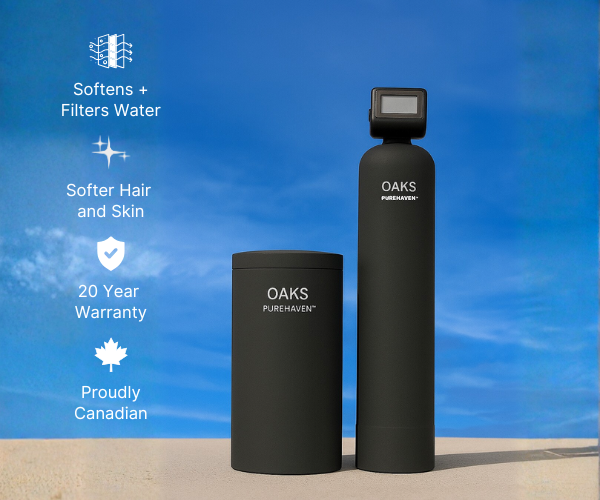
The correct size of the Oaks water softener is very important for a better experience. The size of the system should be chosen after knowing the hardness level, water usage, and family size. If the system’s size is not appropriate for your usage, it may cause many problems and even destroy the whole system. So, you need to know what size water softener you need.
Understanding How Water Softeners are Sized
Water softener size cannot be estimated from the tank sizes used in systems; it can only be defined by the system’s grain capacity.
Grain capacity is the number of minerals a system can remove before regeneration. It falls between 20,000 and 80,000 grains in residential systems. It depends on the amount of resin in the resin tanks.
A higher resin amount means resin beads can absorb more calcium and magnesium before the regeneration cycle. It never means choosing a system with a higher grain capacity. It may cause a bad experience. The ideal system for your house is one that correctly matches the water hardness level and water usage.
Steps to select the correct size of water softener
You need to carefully select the correct size of the Oaks water softener. The entire process includes the following steps:
Step 1: Determine Your Water Hardness Level
It is important to know the water hardness level before installing a water softener, as an undersized or oversized system may not provide an efficient regeneration process.
Water hardness level means the amount of dissolved calcium and magnesium in the available water. It can be measured in two units: grains per gallon (GPG) and parts per million (ppm).
| Hardness Level | Grains per Gallon (GPG) | mg/L (ppm) |
|---|---|---|
| Soft | 0 – 1 GPG | 0 – 17 mg/L |
| Slightly Hard | 1 – 3.5 GPG | 17 – 60 mg/L |
| Moderately Hard | 3.5 – 7 GPG | 60 – 120 mg/L |
| Hard | 7 – 10.5 GPG | 120 – 180 mg/L |
| Very Hard | 10.5+ GPG | 180+ mg/L |
How to Check Your Water Hardness:
You may check your water hardness level by following these reliable ways:
- Check the municipal water report
- Check the water hardness level by using a home water test kit
- Send available water to the laboratory for testing and professional recommendations
Step 2: Calculate Daily Household Water Usage
Once you know the water hardness level, the next important step is to understand your water usage. In most Canadian homes, each person uses 50-70 gallons per day. This includes every household activity, such as cleaning, showering, washing, and drinking. Water usage can be calculated as:
Water usage per day = No of family members × 60 gallons
Step 3: Calculate Your Daily Grain Removal Requirement
The key factor to consider when sizing the water softener system is its grain capacity. Once you know daily water usage and hardness level, you can easily determine the grain capacity you need.
Grains capacity per day = Daily gallons × hardness (GPG)
As most of the systems are monitored to regenerate after 7-10 days to avoid salt and water wastage, multiply the grains per day by 7 to know the recommended weekly grain capacity.
Recommended weekly grain capacity = grain capacity per day × 7
Water Softener Size Chart by Household Size
| Household Size | 5–10 GPG Hardness | 10–15 GPG Hardness | 15–20+ GPG Hardness |
|---|---|---|---|
| 1–2 People | 24,000 grains | 32,000 grains | 32,000–40,000 grains |
| 3–4 People | 32,000 grains | 40,000 grains | 48,000 grains |
| 5–6 People | 40,000 grains | 48,000 grains | 64,000 grains |
| 7+ People | 48,000 grains | 64,000 grains | 80,000 grains |
This quick chart may help you make a quick decision for the system’s size, but you should also calculate it manually for an accurate size and a better experience.
Small vs. Medium vs. Large Water Softeners
- Smaller Systems (20,000–30,000 grains)
These systems are specifically usable for a small apartment with 1-2 family members.
- Medium Systems (30,000–60,000 grains)
These systems are efficient for homes with 3-5 family members.
- Large Systems (60,000–100,000 grains)
These systems are specially designed for larger houses with hard water and 6+ family members.
How Regeneration Frequency Affects Sizing
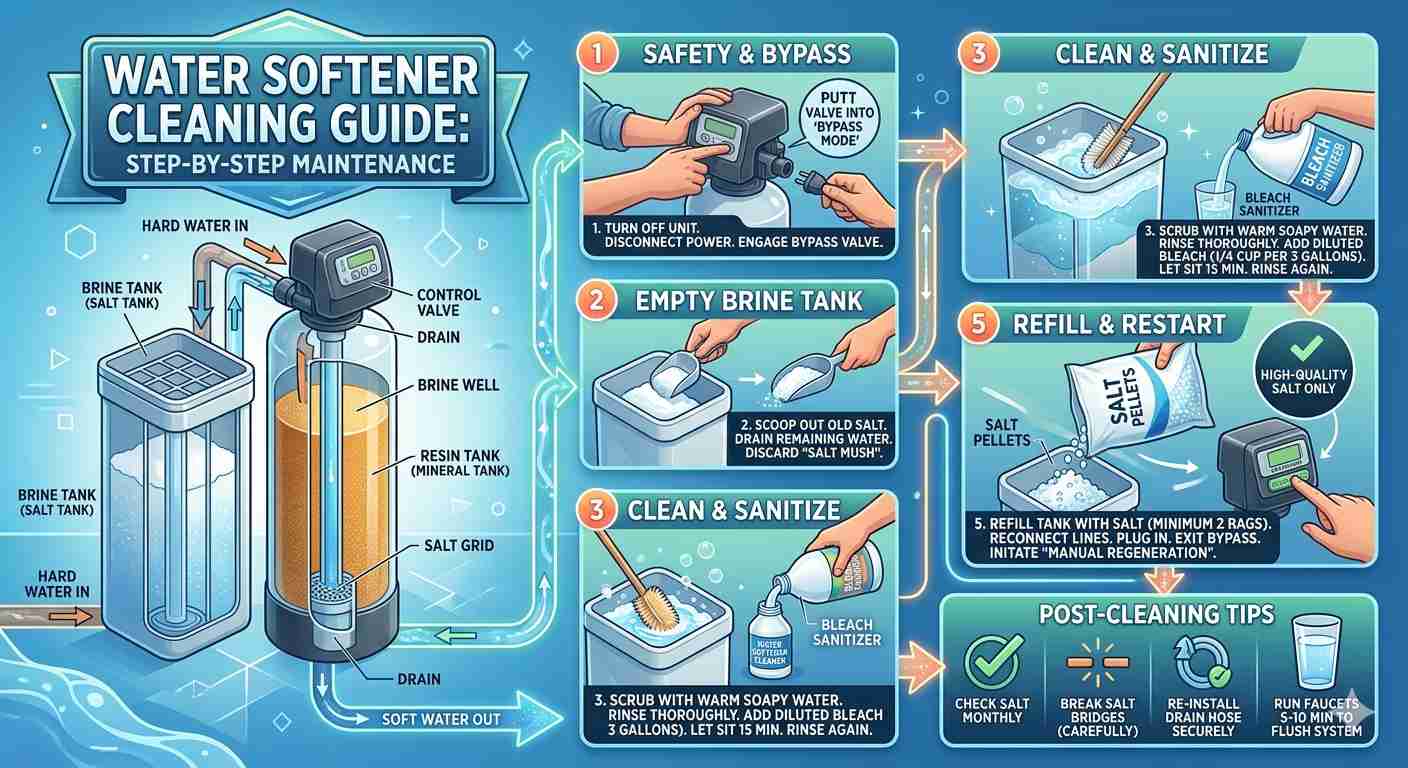
The regeneration process in ion-exchange water softeners flushes the resin tank to remove accumulated minerals from the resin beads, and then rinses it with a brine solution to prepare it to absorb calcium and magnesium again.
An incorrect water softener size may cause over- or under-regeneration. Frequent regeneration may cause salt and water waste, while infrequent regeneration may increase bacterial risk and resin fouling.
Adjusting for Iron in Well Water
Many rural Canadian homes use well water that may contain iron. The iron present in water may cause rust stains on your appliances. If the system is not adjusted for the iron present in available water, it may cause frequent regeneration, reduce the efficiency of the resin beads, and, as a result, provide you with lower-quality water.
It is recommended to test the water for iron. If it contains some iron, add 3-5 grains per gallon to the system’s capacity for every 1 ppm of iron.
What Happens If Your Water Softener is Too Small?
If your system is undersized, it will not work efficiently. You may face the following problems:
- Frequent regeneration
- Higher salt and water bills
- Hard water breakthrough
- Reduced system lifespan
Is It Bad to Oversize a Water Softener?
Yes, oversizing a water softener system is not recommended. Moderate oversizing could be beneficial, as you sometimes have guests at your house and use more water than usual.
Excessive oversizing is not beneficial at all. It may cause a lot of problems for you, such as:
- Water may flow unevenly through the resin tank, leaving many resin beads unused.
- The larger systems are expensive and also disturb your budget by using more salt.
- Regeneration may occur less frequently, causing bacterial growth in the water tank and resin fouling.
Flow Rate Considerations
Just as with grain capacity, a low rate is also an important factor to consider when sizing your water softener system. Flow rate can be measured as gallons per minute (GPM). A system with adequate grain capacity but having an insufficient flow rate may disturb you and your comfort.
Flow rate is important because you may use it for simultaneous purposes and need soft water everywhere. Lower GPM means a lower flow rate and possibly lower-quality water.
You may estimate the needed GPM according to your household size:
- 6–8 GPM is usually sufficient for small homes or 1–2 bathrooms.
- 8–12 GPM is recommended for medium homes or 2–3 bathrooms.
- 12–16 GPM or more may be necessary for large homes or 4+ bathrooms.
Professional Water Testing vs. DIY Sizing
You may test your water and estimate DIY sizing yourself. Still, a laboratory test may be recommended after checking water hardness (GPG or mg/L), Iron and manganese levels, pH, other chemical characteristics, and total dissolved solids (TDS).
Professional testing is highly recommended not only because it accurately tests your water but also because it provides you with peace of mind and recommends a tailored system that meets your needs, ensuring an efficient system.
Final Thoughts: Choosing the Right Size for Long-Term Efficiency
Choosing the right size of water softener system is important for long-term efficiency, cost efficiency, and long-term durability.
Always choose the right-sized system with accurate GPM and grain capacity after checking the water hardness level, household size, and water usage demand.
It is recommended to contact an Oaks professional to tailor the best system size to your needs.