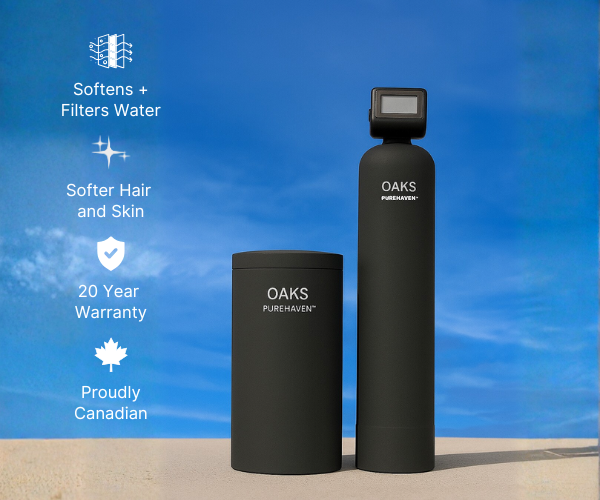
Hard Water affects household appliances and our health. If you want clean, healthy water, you need to install a system to clean the Hard Water, i.e., the Oaks Wellness Water RO system, which delivers the best results with a 20+ year warranty.
If you choose a Reverse Osmosis system to get clean, hotel-quality water, the first step is to determine the size of the RO tank you need for a better experience. Choosing the right RO system size is crucial to ensuring the best availability of clean water.
Factors that affect the RO system’s output
Additionally, you need to consider all factors that affect the RO system’s actual output.
- RO system size should be considered according to water usage per family.
- RO flow rate that is required to maintain ideal pressure for better results.
- The type of system according to your need and household usage, i.e., you need to install only an Under-sink RO system or a whole-house water filtration system.
- If you are installing a tank, you have to consider what RO tank size you require.
- Which membranes do you require in your system according to the water quality and contamination levels they have?
You may choose any system size based on your Canadian home’s needs (Ontario water quality differences). But it is recommended that you always use a larger system than your minimum usage system, because undersized systems result in low output, slow refills, and a poor user experience.
Understanding RO Sizes (GPD)
You have to choose the RO size based on your usage and family size. The standard for measuring the size of RO water filtration systems is GPD.
What Is GPD?
GPP, also called Gallons Per Day, typically refers to the maximum amount of clean, healthy water the RO system membrane can produce in a day. For example, a 50 GPD system means that the installed RO system can produce 50 gallons of clean water over 24 hours. But the real output is always lower than the given rating, depending upon other factors.
So, after estimating your family size and considering your water use, choose the best RO system size. The following are the commonly used RO sizes:
- 50 GPD
- 75 GPD
- 100 GPD
- 150 GPD
- 200 GPD
What Affects Actual Output:
Before installing any RO system, you must consider all factors that affect its output. The following are the factors that affect the actual output production:
- Cold Water
The GDP RO system output is significantly affected by the water temperature. The ideal temperature for better results is 25℃. If the water is colder than the required temperature, it decreases the actual output due to its higher density and the RO system would be unable to clean the water efficiently.
- Low Water Pressure
The main driving force of the RO System is high water pressure, as the system works against osmotic pressure. So, lower water pressure reduces the RO system’s efficiency, and you need to use a boost pump to increase it.
- High TDS
TDS stands for total dissolved solids, which make water hard. The higher the TDS, the lower the RO system’s efficiency, because higher TDS increases osmotic pressure, requiring the RO system to work against it.
- Membrane Age
The actual output also depends significantly on the age of the membrane used in the RO system. As time passes, the membrane becomes fouled and scaled with salts, requiring more time to filter and produce clean and healthy water. So, it is required to change the RO membrane after a specific time period for better results.
- Filter Blockages
Sometimes the pre-filters can be used as filter blockages. The pre-filters, i.e., sediments and carbon, are used to prevent heavy particles from contacting the actual membrane, which may cause it to be destroyed more easily. But when the pre-filters become saturated with salts, sand, etc., they also affect efficiency, so they have to be changed on time.
- Municipal vs. Well Water Quality
Municipal water is city water that is mostly Hard Water in Canada and contains higher levels of salts than well water. If the municipal water is clean, the RO system may be less efficient due to a higher salt content.
- Canadian Winters
The harsh Canadian winters lower water temperature, making it denser and reducing the RO system’s output.
Choosing RO Size according to Family Size and Home Usage
It is recommended that you choose the best RO water filtration system according to your family size for a better experience. Here are some recommended RO water usages per family:
1–2 Persons
If you have a small family of 1-2 members and use only clean water for drinking and cooking, it is recommended that you install an under-sink RO water filtration system with a capacity of 50-75 GDP rate. If consumption exceeds that, use a larger tank to meet your needs.
3–5 Persons
If you have a family of 3-5 members and you use clean water for drinking and cooking purposes, it is recommended that you install an RO system with a 75-100 GDP rate, which is the best choice for typical Canadian families. You may use a larger tank for higher consumptions.
Large Family (5+ Persons)
If you have a large family with 5+ members, it is recommended that you install an RO system with a 100-150+ GDP rate. This system may provide fast recovery of clean water and store a larger quantity of water. For a better experience, it is recommended to install a whole-house water filtration system instead of an under-sink RO system.
Special Usage – You Should Upgrade:
Besides cooking and drinking, RO systems may also be used for other household chores and in offices. Consider upgrading water systems for other special uses, such as aquarium water, home juicers, ice makers, and small-office use.
When You Need a Whole House Water Filtration System
You may consider the size of the RO system based on your needs, but for a better experience, you should contact Oaks Wellness Water to install a whole-house water filtration system.
The following are certain situations where an under-sink RO system is not enough, and you need to install a whole-house water filtration system:
- If you have high TDs water in the available form, whether it is well water or municipal (city) water.
- If you use well water instead of municipal water, it may be unhealthy due to iron, sulphur, hardness and some sediment.
- If you want to get clean and healthy water after removing saltwater intrusions that are significantly common in Ontario regions, as they use seawater containing higher amounts of calcium and magnesium.
- If you want to enjoy clean and hotel-quality water in a large home with multiple outlets.
- Mostly, Hard Water does not affect health badly, but for health-sensitive individuals, it is necessary to use clean and healthy water for drinking as well as all household chores.
Flow Rate Examples:
If, after estimating the above-discussed factors, you consider that you need a whole-house water filtration system, the following commonly used flow rates are available for that purpose:
- For a typical entry-level whole-house system, a 500 GPD rate is an ideal rate.
- For medium-sized homes, a 1,000–1,500 GPD rate is a better choice.
- For Large homes, cottages, or high consumption, an RO system with a 2,000+ GPD rate may make you tension-free.
Additional Factors to Consider
Besides all the factors discussed above, there are some other additional factors for consideration to take better action for the best installment:
Water Pressure
The main driving force of RO is high water pressure. The ideal pressure for better results is 40-60 PSI. If the pressure is lower than the required one, it may reduce the actual output. So, a booster pump is needed in some Ontario homes to increase the output.
Tank Size
The tank size also directly impacts the actual output. A small tank size reduces output. For example, 2-4-gallon tanks deliver only half their capacity, so bigger families require 4-8-gallon tanks.
Filter Stages
There are some filter stages used in the RO system that make the Hard Water cleaner and healthier, and increase the efficiency and lifespan of the RO systems:
- Pre-filters (sediment + carbon) that are used before the RO main membranes, which filter a high amount of salts and sand, etc. It may help to increase the age of the RO membrane by preventing the passage of large molecules through the main membrane, which can block its small pores.
- RO membrane is the main membrane working against osmosis pressure and removes extra salts and contaminants. It mainly works to give you a better experience.
- Post-polish filters are the filters used after the RO membrane that may filter the contaminants that remain there by chance after filtration from the RO membrane. It is an additional filter used to provide the best-quality water.
- There are some more stages besides pre-filters, post-polish filters and RO membrane used in highly modified Oaks Wellness water RO systems that give a smoother taste and better water quality, which is cleaner and healthier water.
Water Quality
Water quality is also a primary factor to consider when selecting the size and type of RO system. You may have to consider hardness levels, TDs, Chlorine, Iron, and manganese levels (specifically in well water), and other contaminants. If the available water has a higher contamination level, choose a larger system and add pre-filters and post-polish filters.
Simple Comparison Table
| Household Size | Recommended RO Size | Best Use Case | Tank Suggestion |
|---|---|---|---|
| 1–2 Persons | 50–75 GPD | Drinking + cooking |
3–4 gallon tank |
| 3–5 Persons | 75–100 GPD | Daily home use | 4–6 gallon tank |
| 5+Persons | 100–150+ GPD | Large family | 6–8 gallon tank |
| Whole House | 500–2,000+ GPD | Full home water | 20–100+ gallon tank |
Final Recommendations
In final words, it is recommended that you choose the best RO system wisely after considering the size of your family, its daily amount of water usage, and the type of usage, i.e., you need clean water only for drinking purposes or for all household chores. Choose the specific RO water filtration system and tank size that is one step above your minimum requirements. However, a Whole-house water filtration system is recommended when regular water sources have significant issues, and you want to eliminate all those problems.
You can choose the best RO system by evaluating and observing the factors discussed above, but for optimal performance, test your water and check its salt content. After that, check the water pressure and ensure it meets the required pressure for installing the RO system. You need to maintain the filters after a specific time. It could be understood that it requires your attention and time, but you need not worry. Because Oaks Water offers reliable RO systems designed for Canadian homes — ensuring safe, healthier, and great-tasting, hotel-quality water.