Clean, healthy, and good-tasting water is not a luxury anymore. It’s a basic need for every family. We depend on safe water for drinking, cooking, hydration, bathing, and even for better-tasting tea or coffee.
Many people start with simple water filter pitchers because they’re affordable and easy to use. But once you learn what’s actually in tap water, an important question comes up:
Should you choose an RO system or a pitcher filter to keep your water truly safe?
Oaks Wellness Water makes it easier for Ontario families to choose the best option by providing water systems
that focus not only on better taste but also on long-term health, safety, and comfort.
How Reverse Osmosis (RO) Systems Work?
Reverse osmosis works very differently from a basic water pitcher or gravity-fed jug. Instead of relying on a small carbon filter, an RO system uses your home’s water pressure and several filtration stages to remove impurities much more effectively.
A normal water filter pitcher only lets water drip through a small carbon filter.
RO systems can improve taste, but it doesn’t remove dissolved metals, PFAS, nitrates, medicines, or microplastics. Our RO system is built specifically to deal with these deeper contaminants.
Here’s the process in simple steps:
-
- Pre-Filtration:
- Pre-Filtration:
The water first goes through sediment and carbon filters. These remove dust, chlorine, and chemicals that could damage the RO membrane.
-
- RO Membrane:
- RO Membrane:
Next, water is pushed through a semipermeable membrane. Only water molecules can pass through; contaminants like dissolved solids, heavy metals, and most chemicals are blocked and flushed away.
-
- Polishing Filter:
- Polishing Filter:
After the membrane, the water goes through another carbon filter to improve taste and remove any leftover odor or aeration.
-
- Remineralization (Oaks Wellness Water advantage):
- Remineralization (Oaks Wellness Water advantage):
Unlike many RO systems that leave the water flat, Oaks Wellness Water adds essential minerals like calcium and magnesium back into the water. This makes the water alkaline, smoother, and better tasting.
-
- Storage & Delivery:
- Storage & Delivery:
The purified water is then stored in a tank or delivered directly through a dedicated faucet, giving you clean water whenever you need it for drinking or cooking.
This multi-step process is what makes RO systems far more effective than pitchers. When comparing RO vs. pitcher filters. The difference comes down to technology and results:
Pitchers improve taste, while RO systems improve the actual quality and purity of the water.
6 Stages of RO Filtration (Oaks Wellness Water)
RO filtration cleans your water through different steps. Each step removes a specific type of contamination, making the water pure and safe to drink. All these stages work together to give your home clean, healthy, and mineral-balanced water.
Stage 1: Sediment Pre-Filter: (5 micron)
Removes sand, rust, dirt, silt, and larger particles to protect the system and improve clarity.
Stage 2: Granular Activated Carbon (GAC) Filter:
Removes chlorine, chemical tastes, odors, VOCs, and protects the RO membrane from chlorine damage.
Stage 3: Carbon Block Filter:
Further removes chlorine, chloramines, PFAS precursors, fine VOCs, and organic chemicals to polish the water before the membrane.
Stage 4: Reverse Osmosis Membrane (High-Rejection Polyamide Membrane)
Removes 95–99% of dissolved contaminants, including:
• Heavy metals (lead, arsenic, chromium, mercury)
• Fluoride
• PFAS / PFOA / PFOS
• Nitrates
• Pharmaceuticals
• Microplastics
• Salts, TDS, and dissolved solids
This is the core purification engine.
Stage 5: Post-Carbon Polishing Filter (Coconut Shell Carbon)
Polishes taste, removes any remaining odors, and improves flavor before the water reaches the faucet.
Stage 6: Remineralization / Alkaline Filter
Adds back beneficial trace minerals (calcium + magnesium) and naturally raises the pH for a smoother taste.
“This is why the water tastes clean but not “flat” like traditional RO.”
How Pitcher Filters Work?
Pitcher filters are designed to be simple, affordable, and convenient for daily use. They work simply.
You fill the top tank, and water slowly drips through a small carbon cartridge into the bottom tank. This improves taste, but their capabilities are limited.
What pitcher filters do:
-
- Reduce chlorine taste and smell
-
- Capture some sediment
-
- Offer quick, inexpensive filtration of tap water
-
- Make hot and cold drinks taste better
What pitcher filters don’t do:
-
- Remove dissolved contaminants like PFAS (forever chemicals)
-
- Fully eliminate heavy metals such as lead, mercury, and chromium-6
-
- Remove nitrates, TDS, or fluoride
-
- Filter out pharmaceuticals or microplastics
-
- Kill bacteria or viruses
-
- Handle large amounts of water without frequent refills
Even high-end “RO” water pitchers work on the same gravity-fed principle with a carbon filter. They don’t have a real RO membrane and cannot provide true membrane-level purification.
For households concerned about long-term safety, purity, and water quality, pitchers can be a starting point, but they are not a complete solution.
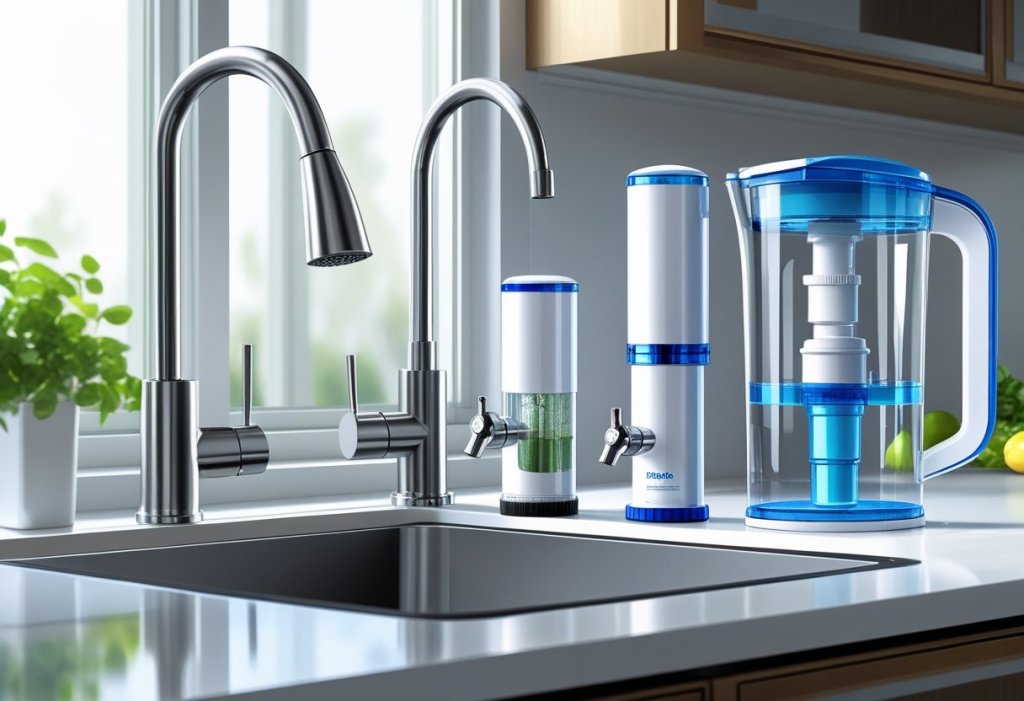
Compare Pitcher Filters vs RO
Pitcher filters can improve the taste of water, but they don’t provide deep purification. RO systems remove many more contaminants, giving you cleaner and safer water for your whole family. That’s why RO is the better choice when you want both good taste and better health.
| Feature | Pitcher Filter | RO System |
| ContaminantsRemoved | Chlorine, minorMetals,taste/odour | Lead, arsenic, PFAS,bacteria, viruses,chemicals, TDS |
| Capacity | Small, frequentrefills | Large, faucet-ready orcountertop |
| Maintenance | Every 2 months | Every 12 months |
| Filtration Speed | Slow,gravity-based | Fast, continuous supply |
| Cost | Low upfront,recurring | Higher upfront,cost-effective long-term |
| Taste & Safety | Minorimprovement | Major improvement |
| Environmental Impact | Filter waste | Less waste, reducesbottled water use |
Find your perfect system.
Your local Oaks experts will provide personalized recommendations for the right solution for your home.
Cost vs Long-Term Value: RO vs Pitchers
In RO vs pitcher filters, the initial thing that is often observed is the initial cost. Pitcher filters are not expensive initially, although the long-term cost is quite different.
Similar to bottled water, frequent changes, small capacity, and the need for bottled water make the pitchers more costly than they might seem.
RO systems are more expensive in upfront investments and give deeper purification, prolonged filter life, and superior long-term performance.
Key points to understand
-
- Pitcher filters should be replaced continually.
-
- The cartridges have a very short life span, between one and two months.
-
- The more one uses it, the more one refills it and the more one spends.
-
- It is still common in many homes to purchase bottled water since the taste is better, and purification is not.
-
- Families have an increased yearly cost.
Why does RO offer better value?
-
- Maintenance of RO filters is normally annual.
-
- There is one system with drinking, cooking, coffee, tea, and baby formula.
-
- The majority of households quit purchasing bottled water altogether.
-
- RO offers much greater cleaning capability over contaminants than any reverse osmosis water pitcher.
-
- The costs of ownership are reduced in the long term as the performance rises.
The long-term value of the RO system is substantially larger as compared to that of pitcher filters to the homeowner who wishes to have quality and regular drinking water.
This is the reason why a lot of families that are evaluating such solutions as RO water filtration in Kitchener prefer it because it will save money in the long run and also because of its reliable quality.
Environmental Impact: How RO Helps the Planet
Pitcher filters may seem eco-friendly at first, but in reality, they generate a lot of plastic waste. Since pitchers mainly improve taste, many households still rely on bottled water for drinking and cooking. This increases plastic use and long-term waste.
Environmental issues with pitcher filters:
-
- Plastic cartridges are thrown away frequently
-
- Short lifespan means frequent replacements
-
- Many families continue buying bottled water
-
- Packaging waste keeps accumulating
-
- Overall, higher plastic output
How RO reduces environmental impact:
-
- RO filters last much longer than pitcher cartridges
-
- One RO system can replace hundreds of bottled water containers per year
-
- Families can rely on tap water, reducing the need for plastic jugs
-
- Modern RO systems are more water-efficient than older models
-
- Long-term use significantly lowers plastic consumption
Households that install RO systems enjoy two main benefits:
-
- Better water quality.
- Noticeable reduction in plastic waste.
For many families, RO is a sustainable upgrade that protects both health and the environment.
Why RO is the Best Choice
RO systems provide much more purified water than any pitcher filter. While pitchers improve taste, RO systems improve both taste and safety by removing a wide range of contaminants.
Why RO is preferred:
-
- Removes a greater variety of contaminants, including heavy metals and PFAS
-
- Provides clean water directly from a dedicated faucet
-
- Filters last longer and require fewer replacements
-
- Works efficiently for drinking, cooking, tea, coffee, and baby bottles
-
- Oaks Wellness Water systems add natural minerals for smoother, better-tasting water
-
- Offers superior protection compared to any pitcher.
Conclusion:
When comparing RO vs. pitcher filters, RO is clearly the better option. Pitchers improve taste but don’t remove many harmful contaminants. RO systems offer higher purification, longer filter life, mineralized smooth water, and better protection. For families who need clean, healthy, and safe water daily, RO is the obvious choice.
You can also contact Oaks Wellness Water for personalized advice on selecting the right RO system for your home.
Find your perfect system.
Your local Oaks experts will provide personalized recommendations for the right solution for your home.
FAQs About Reverse Osmosis vs. Water Pitchers
Is reverse osmosis better than a Brita or pitcher filter?
Yes. RO removes far more contaminants, including heavy metals, PFAS, and nitrates. Pitchers mainly improve taste, while RO improves both taste and water quality.
What is the downside of reverse osmosis water?
Standard RO systems remove both minerals and contaminants but Oaks Wellness Water solves this with a remineralization step, giving you clean, balanced, and smooth-tasting water.
What is the healthiest way to filter water?
A multi-stage RO system with remineralization is best. It removes contaminants and adds essential minerals, providing naturally balanced water.
Is it worth getting a reverse osmosis system instead of a Brita?
Yes. RO goes beyond taste, is more efficient, has a longer lifespan, and provides a much cleaner water source. Pitchers mainly reduce chlorine and bad odors.
Is RO water good for the kidneys?
Yes. Remineralized RO water is safe for the kidneys. It removes harmful chemicals, reducing the work your kidneys need to do, and is excellent for daily hydration.
Is reverse osmosis a good choice for homes in Kitchener?
Yes. Many Kitchener homeowners choose RO because it reduces chlorine, metals, and other pollutants in tap water, providing clean and great-tasting water directly from the fa
ucet.
Written by Joseph Mroueh
Joseph, founder of Oaks, develops high-quality whole-home and drinking-water filtration systems. He focuses on delivering reliable, clean, and safe water solutions for modern households.
Share