Get the Right Well Water Treatment Solution

Millions of Canadians rely on clear underground well water after giving up municipal water. They all trust the crisp, and natural taste of underground water, but it comes with many contaminants that may pose serious health risks to your family and damage your household system.
Clear well water has many common issues, including sediments, bacteria, viruses, and dissolved minerals and metals, which may be caused by flooding, land runoff, and other factors.
You need to solve this problem to protect your family and household. OAKS Wellness Water provides the best water filters to clean your well water, reducing health risks and improving the efficiency of your household.
Why Cleaning Well Water Is Important
Contaminated well water not only poses waterborne disease risks but also damages household appliances and water pipelines by clogging them with accumulated contaminants, potentially leading to costly repairs in the long run. Cleaning the well water is important to:
- Protect your family from waterborne diseases
- Maintain safe drinking water standards
- Protect the well structure and performance of households
- Avoid costly repairs of your appliances and plumbing
Common Causes of Well Water Contamination
The available well water in Canada does not have only one type of contamination; it has different types of contaminants in different areas, depending on the land form and geography:
- Physical Contaminants (Sand, mud, silt, debris, leaves, insects, animal waste)
- Biological Contamination (Bacteria, Viruses, parasites)
- Chemical Contamination (Pesticides, Fertilizers, Heavy metals)
- Structural Issues (Poor well construction, Cracked casing, Open/uncovered wells)
Find your perfect system.
Your local Oaks experts will provide personalized recommendations for the right solution for your home.
Signs Your Well Water Needs Cleaning
You can’t say your water is clean just because it looks clean and clear. You always need to test your water before using it in your home. You may send it to a professional laboratory for testing. Besides this, you may observe some common issues by yourself, such as:
- Cloudy water due to suspended particles
- Bad taste or odor due to metals present in the well water
- Reduced water pressure due to clogging caused by the accumulation of contamination
- Stains or discoloration due to water hardness
- Slime buildup (biofouling) due to bacterial or viral growth
Types of Wells and Why They Matters
Each type of well contains different types of contaminants, so it is very important to understand the types of wells from which you are draining water for daily usage:
Dug Wells (Shallow)
These wells are very close to the surface and are at high risk of contamination from debris, land runoff, pesticides, and bacteria. Its water generally reaches your house without any natural filtration, as it does not pass through multiple layers of soil.
Driven Wells
They are slightly deeper than dug wells, pose moderate risks, and require cleaning and filtration for a better experience.
Drilled/Borehole Wells
These types of wells are deeper and provide cleaner water because natural filtration passes through the layers of soil and rock. It is highly safe but may also need filtration in some cases.
How to Clean Well Water: Step-by-Step Process
Cleaning and selecting any well water filter for your well water is a very important decision and needs a step-by-step process to be completed:
1. Water Testing
Test Your Well Water for bacteria, chemicals, iron, or sediments. You may test it using home water-testing kits or send the available water to a professional laboratory.
2. Infrastructure Inspection
Inspect the Well casing to determine whether it is sealed. Check the pump condition. Look for any cracks in the infrastructure, corrosion in pipelines, and open exposure of well water. These issues should be fixed before cleaning or installing a filter.
3. Physical Cleaning
Properly clean the well. Remove debris manually, scrub walls, and remove sediment buildup using brushes and scrapers. You can use pressurized air or a flushing process for physical cleaning.
4. Removal of Sediments and Biofouling
Remove sediments and biofouling caused by bacteria through mechanical scraping and acid wash. Always use inhibitors to protect well materials from acid wash.
5. Shock disinfection
Use chlorine to kill bacteria and viruses, a process also called shock disinfection. Do this process only if chlorination is not banned in your area.
The basic shock disinfection process is as follows:
- Add calculated bleach amount
- Circulate water through the pipelines
- Let it sit for 8–24 hours
- Flush the whole system
It is recommended not to use water during this treatment and to use protective gear.
6. Installing the Water Treatment System
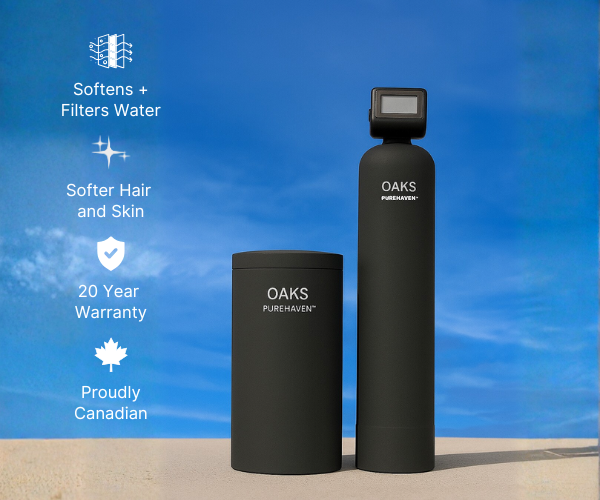
Choose the water treatment systems that fit your needs. It is recommended to install an OAKS water filter with a sediment filter, an iron/sulphur filter, a water softener, and UV sterilization to remove all types of contaminants and provide you with pure, healthy, clean, and hotel-quality water.
Find your perfect system.
Your local Oaks experts will provide personalized recommendations for the right solution for your home.
Choosing the Right Cleaning Method
Well water filters use various physical, biological, and chemical methods to remove contaminants from well water.
Problem | Solution |
Sediment (sand,dirt) and debris | Physical cleaning by using sediment filters |
Bacteria | Disinfection + UV sterilization |
Chemicals | Carbon filters |
Calcium and magnesium | Reverse osmosis (Water Softener) |
Heavy contamination | Full treatment system having a sediment filter, an iron/ sulphur filter, a water softener, and UV sterilization |
It is recommended to contact OAKS professionals to tailor your system to your needs and the contaminants present in the available well water.
Maintenance Tips to Keep Well Water Clean
Installing OAKS well water filters is not enough. To keep your system working consistently requires proper maintenance.
- Test your water annually to monitor changes in contamination caused by weather changes.
- Keep your well sealed to prevent physical contamination.
- Clean your well and your system regularly.
- Keep pollutants away from the well.
- Avoid placing fertilizers and pesticides near wells, as they can easily seep into the ground and contaminate your well water.
- Maintain filtration systems by replacing their filters.
Emergency Well Cleaning
Installing the OAKS well water purification system is the best solution. Still, there are circumstances when your well needs immediate cleaning and should not be ignored to protect your family from severe health issues.
After a flood or other natural disaster, well water becomes contaminated by soil runoff and bacterial growth from moisture. You need immediate disinfection or shock chlorination to kill the germs.
After the disinfection process, test your water again to ensure you use pure, clean water for cooking, drinking, and other household use.
Common Mistakes to Avoid
There are some common mistakes homeowners make when installing a well water filter that may cause long-term loss for them. For your comfort and better experience, you need to avoid such mistakes as:
- Skipping water testing before choosing the system
- Using the wrong disinfectants to remove biological contaminants
- Ignoring the rusting structural damage of pipelines
- Overusing chemicals for purification
- Not replacing and maintaining filters regularly
Conclusion
Installing a water filter to clean well water is not the easiest estimate to make. It requires proper testing and suitable methods. Different problems associated with well water contamination require different solutions.
Always start with water testing and choose a tailored system that meets your needs. After installing the system, monitor and maintain it regularly to ensure a better experience and consistently deliver cleaner, purer water.
For any professional assistance, feel free to contact OAKS professionals.
Find your perfect system.
Your local Oaks experts will provide personalized recommendations for the right solution for your home.
FAQs about “How to Fix Hard Water”
How often should a well be cleaned?
You need to do an annual inspection to check for bacteria, viruses, and other contaminants in well water. Additionally, your well needs deep cleaning every 5-10 years to remove debris and mineral buildup.
What is shock chlorination?
It is the simplest and least expensive method to clean your well water of bacteria and viruses. You need to add bleach or calcium hypochlorite to the well, keep it in the system for 8-24 hours, and then drain the water from the pipelines until the smell is gone.
Can boiling well water make it safe?
No, it is not safer at all, as boiling just kills the microorganisms and does not remove any other contaminants from the water.
What is the best filtration system for well water?
The OAKS full treatment system, which includes a sediment filter, an iron/sulphur filter, a water softener, and UV sterilization, is the best filtration system.
Can I clean my well myself?
Yes, you can disinfect your well yourself. But the physical cleaning and monitoring of your water filters should be handled by professionals to avoid any discomfort.
Written by Joseph Mroueh
Joseph, founder of Oaks, develops high-quality whole-home and drinking-water filtration systems. He focuses on delivering reliable, clean, and safe water solutions for modern households.
Share