Solve Cambridge's Hard Water Problems

Hard water means unclean water that contains a high amount of dissolved minerals, i.e., Magnesium and Calcium. In Cambridge, most of the available water comes from underground wells, and while passing through the limestone rocks, it absorbs more minerals and becomes hard.
Hard water is really a major issue for Cambridge people. If you use hard water in your home, you will face several issues, i.e., scaling in your water pipes and appliances. Besides these issues, you will have dry and itchy skin along with frizzy hair.
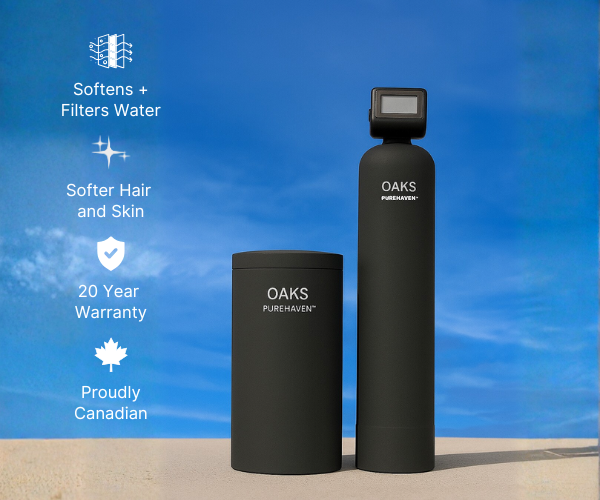
But there are a lot of solutions to the problem of hard water, i.e., OAKS water filtration systems in Cambridge are used in your city to provide you with hotel-quality cleaner water.
How Hard Is Cambridge Water?
Water hardness is basically measured in milligrams per liter (mg/L) or Grains Per Gallon (GPG).
The average hardness level in Cambridge is 20 to 32 GPG or 342 to 548 mg/L. The average hardness across most of the other Canadian cities is only 10-11 GPG. That’s why Cambridge water is considered harder.
Below is the comparison of Cambridge water hardness with other Canadian cities:
Comparison with other regions
Canadian Cities | milligrams per Liter (mg/L) | Grains Per Gallon (GPG) |
Cambridge | 342-548 | 20-32 |
Toronto | 120-124 | 7-8 |
Kitchener | 291-650 | 17-38 |
Waterloo | 360-650 | 17-38 |
Montreal | 109-124 | 6.4-8 |
Ottawa | 30 | 1.8-2.5 |
Halifax | 5-30 | 0.3-1.8 |
Calgary | 126-262 | 7.4-15.3 |
What Causes Hard Water in Cambridge?
In Cambridge, most of the available municipal water comes from deep underground wells. The natural water chemistry of water in Cambridge is also hard. It is a land of mineral-rich soil and rock, with limestone and gypsum. When water passes through the rocks, it absorbs high concentrations of calcium and magnesium, making the water hard.
Common Signs of Hard Water in Homes
You may undertake that the available water is hard water by considering the following signs:
- There will be lime scales on faucets, water pipes, tiles, and your appliances, i.e., washing machines and dishwashers, etc.
- There will be white spots on dishes and glassware.
- You will observe that your soap does not make good lather, and water leaves residues on the skin after rinsing the hands.
- You will feel your skin dry and itchy, and your hair will become frizzy after bathing.
- If you use hard water for laundry, your clothes will become stiff.
Find your perfect system.
Your local Oaks experts will provide personalized recommendations for the right solution for your home.
Impacts of Hard Water
The following are the impacts of Hard Water:
How Hard Water Affects Plumbing and Appliances?
Hard water affects your plumbing system and appliances by building mineral scales in water pipes and other appliances, i.e., washing machine, water heaters, and dishwasher. It may also affect the efficiency by reducing water pressure.
It damages valuable machinery, and for its maintenance, it disturbs your budget and wastes money.
Effects of Hard Water on Skin, Hair, and Laundry
Hard water not only affects plumbing and appliances but also affects human health, skin, and hair. Just like it leaves scales in water pipes and appliances, it leaves soap residues on skin.
Basically, it does not make good soap lather, and even after rinsing, it leaves residues on skin, hair, and laundry. If you use hard water for bathing and laundry purposes, it will reduce the cleaning effectiveness and cause:
- Dryness and itchiness on the skin
- Dry and frizzy hair
- Color fading of clothes
Hard Water Solutions for Cambridge Homes
There are a lot of solutions for cleaning the hard water of Cambridge Homes:
Water softeners (ion exchange method)
You may use some DIY methods, i.e., water softeners that work on the ion exchange method and remove the hardness easily. But it needs your time and money for maintenance after a very short time.
Water Filtration Systems
You may install OAKS Wellness Water’s RO System or Whole-House Water Filtration System to get cleaner and healthier water. Ro is usually an under-sink system, whereas a Whole-House Water Filter is a point of entry and provides clean water in every tap of your home.
Always choose a better option according to your needs and budget. Choose the RO system if your priority is clean water for drinking and cooking purposes. Whereas if you want clean water for all household chores, choose a whole-house water filtration system.
Considerations before Installing a Water Softener
Before choosing any water filtration system, you need to consider the following factors:
- Check the mineral levels and contaminants in available water to determine what purposes you need clean water, and which system is better
- Estimate your water usage to estimate the size of the filter
- Check the installation logistics, i.e., choose a location where power and drainage systems are available easily
- Check the certification standards (WQA, NSF, UL) of the system, whether it is certified by a health organization or not, i.e., OAKS Wellness Systems is certified by NSF.
When to Seek Professional Help
You need to consider a lot of factors before installing a water filter system. Sometimes, you may check these factors by using simple DIYs, but you need to seek professional help for:
- Checking the hardness level of water in the laboratory
- Best system selection guidance according to your usage and the water quality you need
- Installing the system and its maintenance support
Conclusion
Water hardness is a major problem in Cambridge that is caused by the absorption of more minerals in the well water. It may affect your household appliances, skin, hair, and clothing. So, this problem needs proper solutions. The permanent solution to clean the water is to install water filtration systems in your homes that will provide you with cleaner and healthier water.
Check your water and install the best system for cleaning your water. If you need any professional help, contact OAKS Wellness Water for recommendations and to install the best budget-friendly system according to your needs.
Find your perfect system.
Your local Oaks experts will provide personalized recommendations for the right solution for your home.
FAQs
Is Cambridge tap water safe to drink despite being hard?
Hard water is not usually bad for our health. It mainly causes practical issues, such as destroying your household appliances. But if you use it for a long span of time, it may cause hair damage, skin damage and other health issues.
How hard is the water in Cambridge compared to other cities?
As compared to other cities in Canada, Cambridge water is very hard as its hardness level (342-548 mg/L) exceeds the national average hardness level (180 mg/L).
Can hard water damage plumbing and appliances over time?
Yes, hard water damages plumbing and appliances by building mineral scales in water pipes and household appliances.
Do I need a water softener for my home in Cambridge?
Yes, you need a water softener, i.e., RO system or whole house water filtration system in Cambridge, as the available water in Cambridge is not safe to use for drinking as well as other household chores.
Written by Joseph Mroueh
Joseph, founder of Oaks, develops high-quality whole-home and drinking-water filtration systems. He focuses on delivering reliable, clean, and safe water solutions for modern households.
Share